NOPPASIN TAKERNGDEJ, M.D.
Neurosurgery



Many of you may have seen elderly people walking awkwardly with a wide-based gait, struggling to move smoothly as if they might fall at any moment. Sometimes, they experience accidental urinary leakage without realizing it, requiring them to wear diapers when leaving the house. They may perform activities slowly, process thoughts at a slower pace, and show signs of memory decline. Most people tend to dismiss these symptoms as natural aging. In reality, however, these symptoms indicate a neurological condition known as “Normal Pressure Hydrocephalus (NPH)”
Nevertheless, this disease is relatively new and only came to be recognized in 1965—the exact same year Apasra Hongsakula won the Miss Universe title.
Diagnosing this condition was highly difficult in the past. Many elderly individuals missed out on treatment or received inappropriate management. It was frequently misidentified as Parkinson's disease, dementia, Alzheimer's, or even spinal disc herniation or knee osteoarthritis, leading some patients to undergo unnecessary surgeries. However, if diagnosed and treated correctly, patients can fully return to a normal lifestyle in their later years.

Normally, the brain ventricles (Cerebral Ventricle) are cavity structures embedded deep within the cerebrum. They serve as the source and reservoir for a highly specialized fluid in the brain known as “Cerebrospinal Fluid” (CSF: cerebrospinal fluid) The word "Ventricle" refers to a hollow space or cavity within an organ of the human body. In ancient times, it was believed that these cavities were the dwelling place of the human soul.
However, modern scientific studies have shown that dissecting these ventricles reveals only clear fluid. This helped us understand that these ventricles act as a fluid circulation system within the brain, and the fluid itself is cerebrospinal fluid.
Normal cerebrospinal fluid is as clear as pure water and plays several essential roles:
The brain's fluid circulation system consists of four primary ventricles located along the midline of the brain, ordered from top to bottom as: the lateral ventricles, the third ventricle, and the fourth ventricle.

At this point, many of you who have heard about tapping cerebrospinal fluid from the back will have a clearer understanding, as the fluid in the brain and the back belong to the same connected system. After circulating down from the brain into the spinal cord, the cerebrospinal fluid flows back up to the brain area for absorption.
CSF absorption is primarily achieved through three main pathways:
The body has an automatic balance mechanism to ensure fluid production equals absorption, preventing having too much or too little fluid in the brain.
The precise cause remains unknown. It is commonly found in approximately 3% of individuals aged 65 and older, where fluid production and absorption within the brain may become unbalanced, leading to a higher-than-normal accumulation of cerebrospinal fluid.
Contributing Factors
Current scientific evidence suggests that fluid accumulation in the ventricles may be caused by multiple factors, including:
Metabolic alterations as well as blood-brain barrier dysfunction collectively result in abnormal ventricular enlargement, which subsequently triggers various neurological symptoms.


Clinical signs and symptoms are essential for diagnosing NPH. The classic triad of symptoms typically begins with:
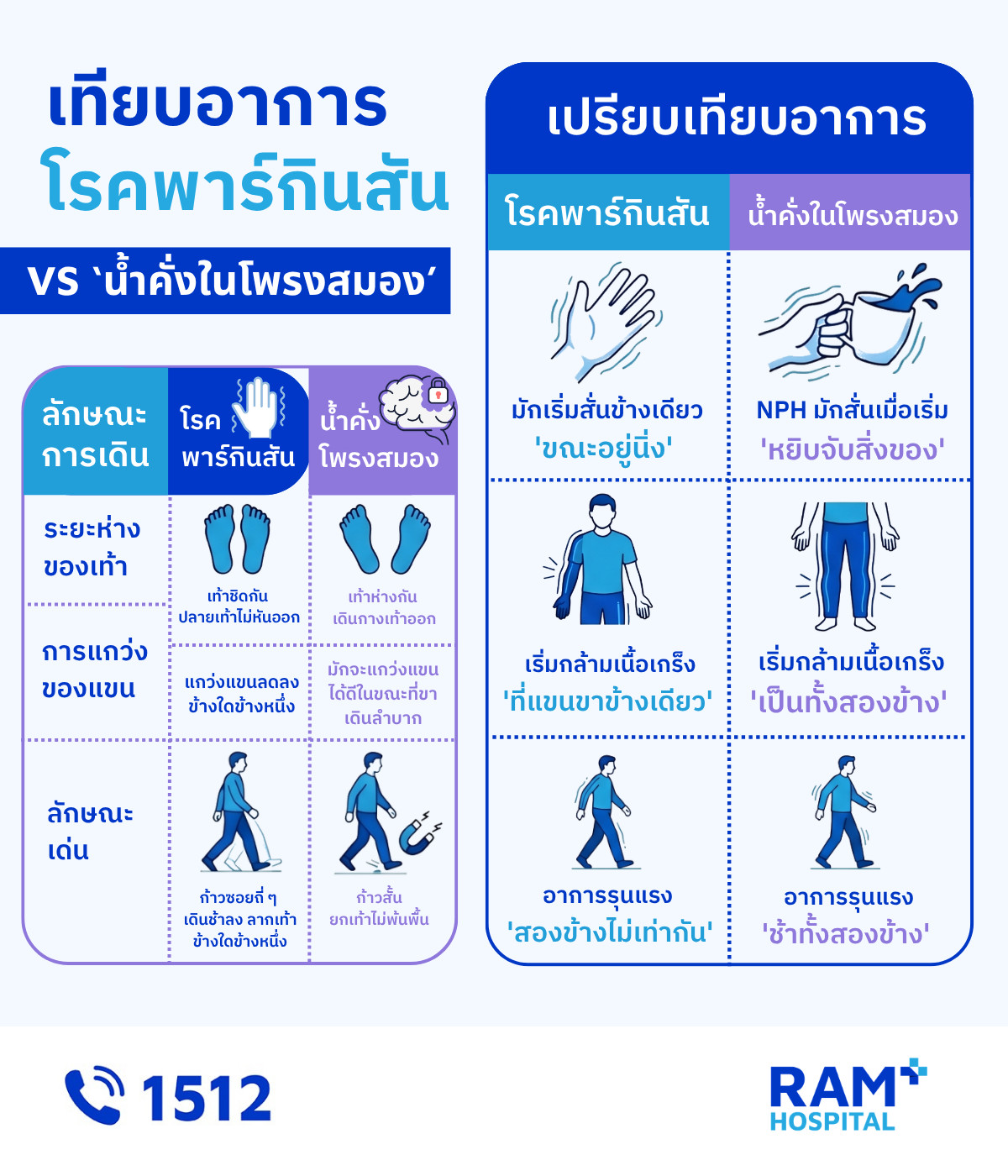
When this condition is suspected in an elderly patient, a brain CT scan or MRI is highly recommended. Diagnostic signs include disproportionately enlarged ventricles relative to the subarachnoid spaces (DESH), widening of the Sylvian fissures, and an increased CSF flow void sign in the aqueduct of Sylvius.
For cases where the diagnosis remains uncertain, a spinal tap test (lumbar puncture tap test) is invaluable for treatment planning. If draining 40–60 ml of CSF leads to a noticeable improvement—especially in gait within a week after drainage—it indicates that the patient will highly benefit from surgical shunt placement.
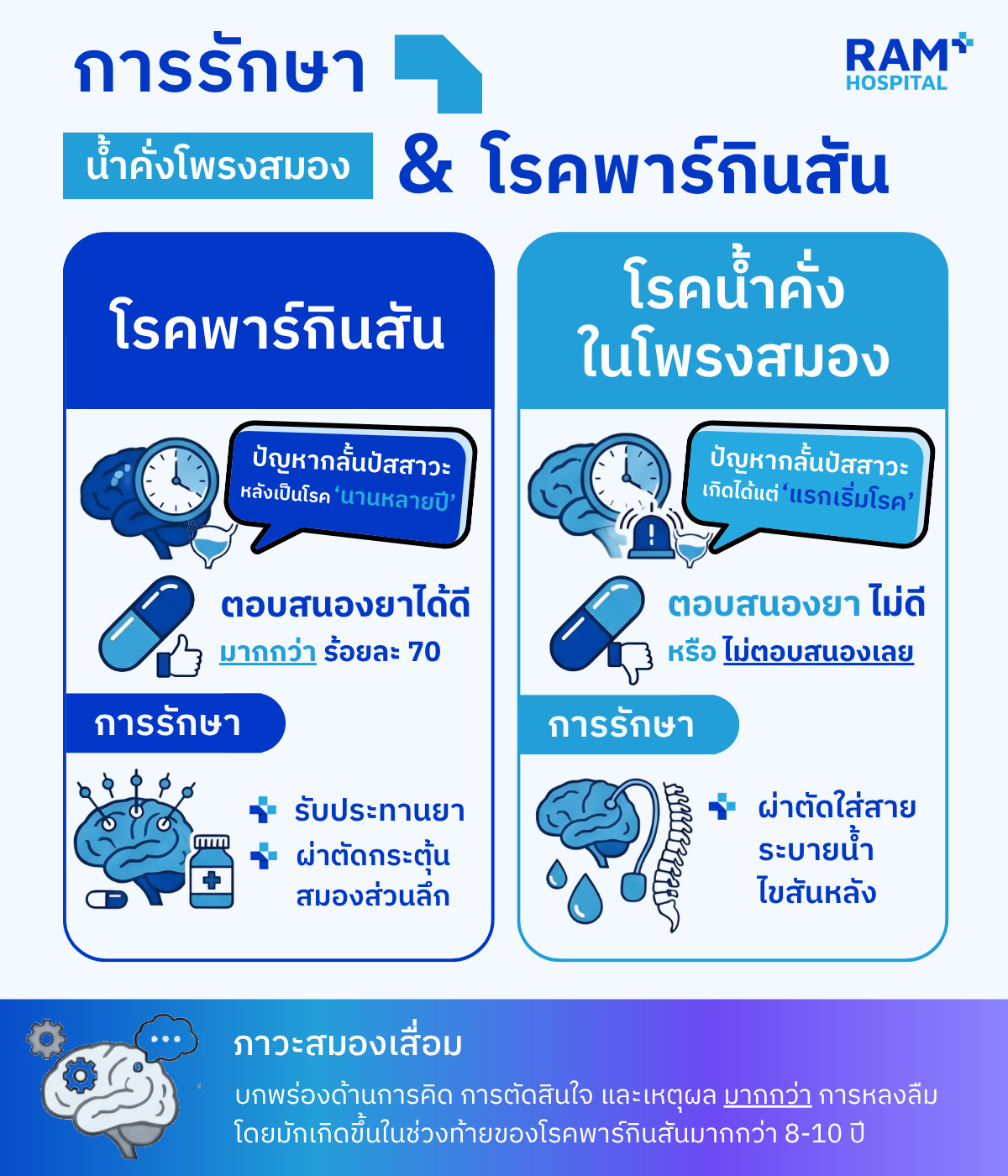
Treatment of NPH (Normal Pressure Hydrocephalus)
NPH cannot be effectively treated with medications; however, it can be successfully treated with surgery. The therapeutic principle is to establish a new pathway for CSF using a permanent drainage tube known as a "Shunt". Although this is a relatively standard surgical procedure, it requires meticulous precision at every stage to minimize risks. This includes pre-operative patient preparation, shunt device selection, surgical technique, post-operative discharge, and continuous follow-up care.
Generally, two surgical techniques are most commonly used:
This method connects a catheter from the enlarged brain ventricle to a small control valve. From there, the drainage line is tunneled beneath the skin down the neck, chest, and into the peritoneal cavity of the abdomen, where organs like the liver and intestines reside. The excess CSF drains into this cavity, is naturally reabsorbed into the bloodstream, and is eventually excreted in the urine. This classic technique has been used for over 80 years to treat hydrocephalus of other etiologies and has been adapted to treat NPH.
Modern shunt devices feature highly advanced valves compared to older models, allowing non-invasive adjustments to flow rates, and catheters coated with antibiotic substances to minimize infection risks. Studies have shown that antibiotic-impregnated shunts reduce infection rates to around 2%, compared to up to 6% with standard shunts. While precise catheter placement in the ventricle was once a challenge, the integration of neuro-navigation technology today allows neurosurgeons to place the shunt with pinpoint accuracy.


Neuro-navigation System
This alternative technique inserts a catheter into the subarachnoid space of the lumbar spine, tunneling it under the skin into the abdominal cavity. This technique is widely utilized in Japan. Its primary advantage is that it requires no cranial drilling, making it sound less intimidating while delivering good therapeutic outcomes. However, it is important to note that LP shunts use a narrower diameter tube, which carries a higher risk of occlusion. Additionally, these catheters do not currently come in antibiotic-coated options, leading to a higher risk of infection. If occlusion or infection occurs, revision surgery is inevitably required.

Since NPH typically affects elderly patients who may only have one ideal window for surgical intervention, the decision to undergo surgery requires a carefully planned, comprehensive approach. This spans from precise diagnosis to choosing the optimal shunt pathway, utilizing precise surgical techniques, and selecting high-quality implant materials. Opting for a programmable valve and an antibiotic-coated catheter will yield the best outcomes.
For patients with NPH, permanent surgical shunt placement to drain excess cerebrospinal fluid is a life-changing procedure that restores their independence, quality of life, and happiness.
Neurosurgery

Neurosurgery

Neurosurgery

General Neurology


