JITRA WONGWIWATTANANON, M.D.
Physical Medicine and Rehabilitation (Rehabilitation Medicine)


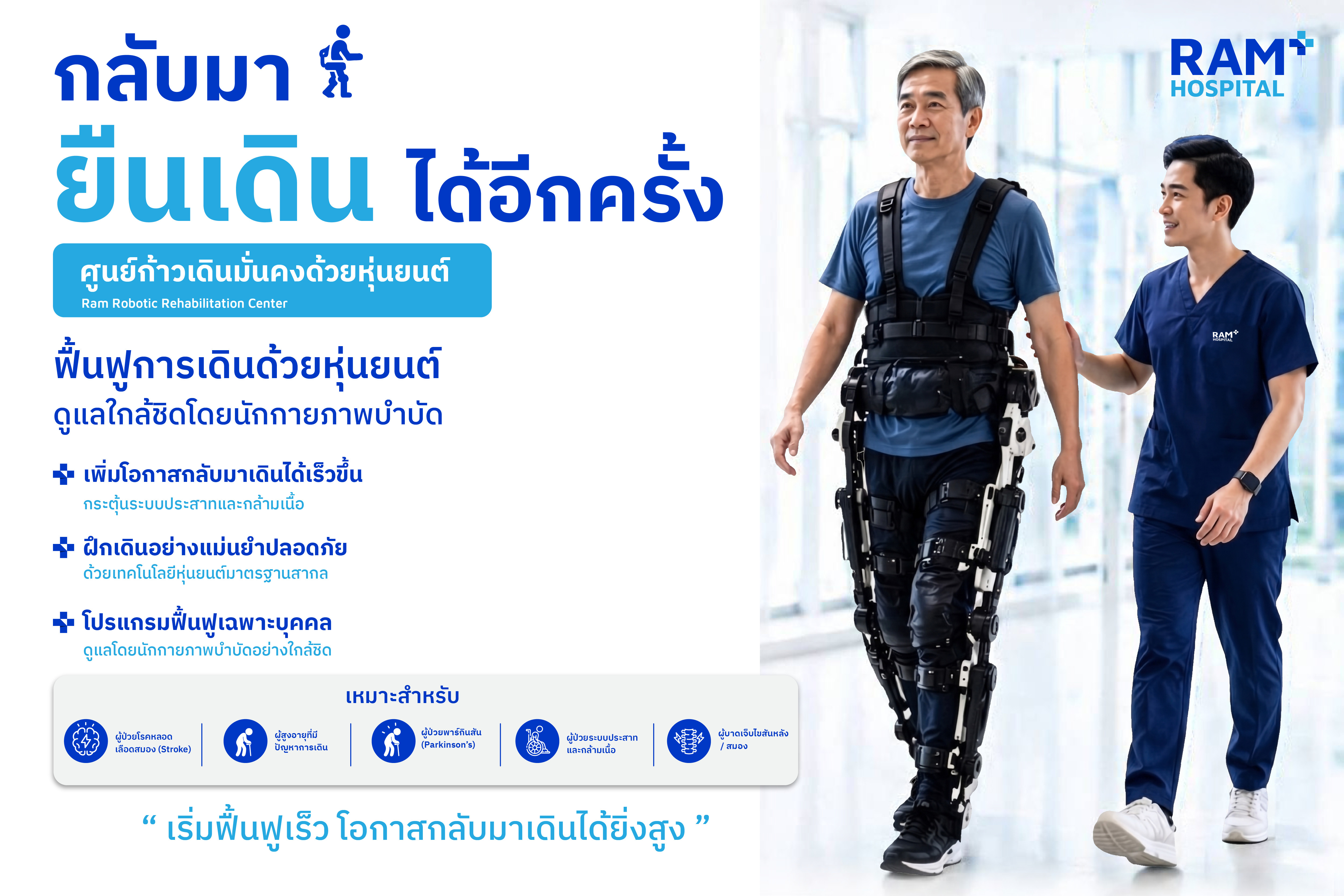
An exoskeleton is a robotic device that helps people with weak or paralyzed lower-body muscles, often due to a stroke. It allows patients with walking difficulties to stand and walk more easily, helping them regain a better quality of life.
This wearable two-legged robot has motors in the hips and knees, powered by an internal battery. It assists walking with a moving suspension frame and crutches, all controlled by wireless software.
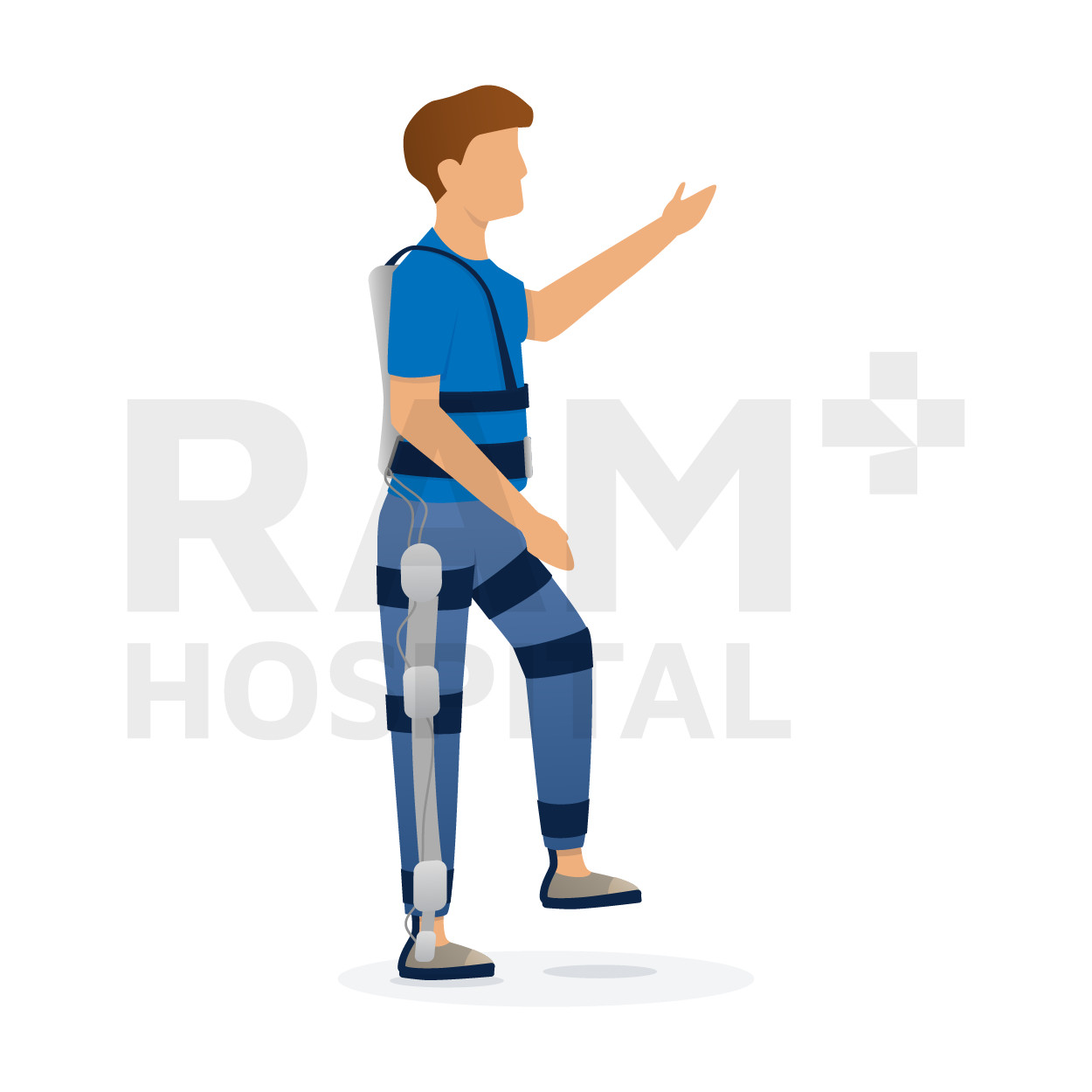
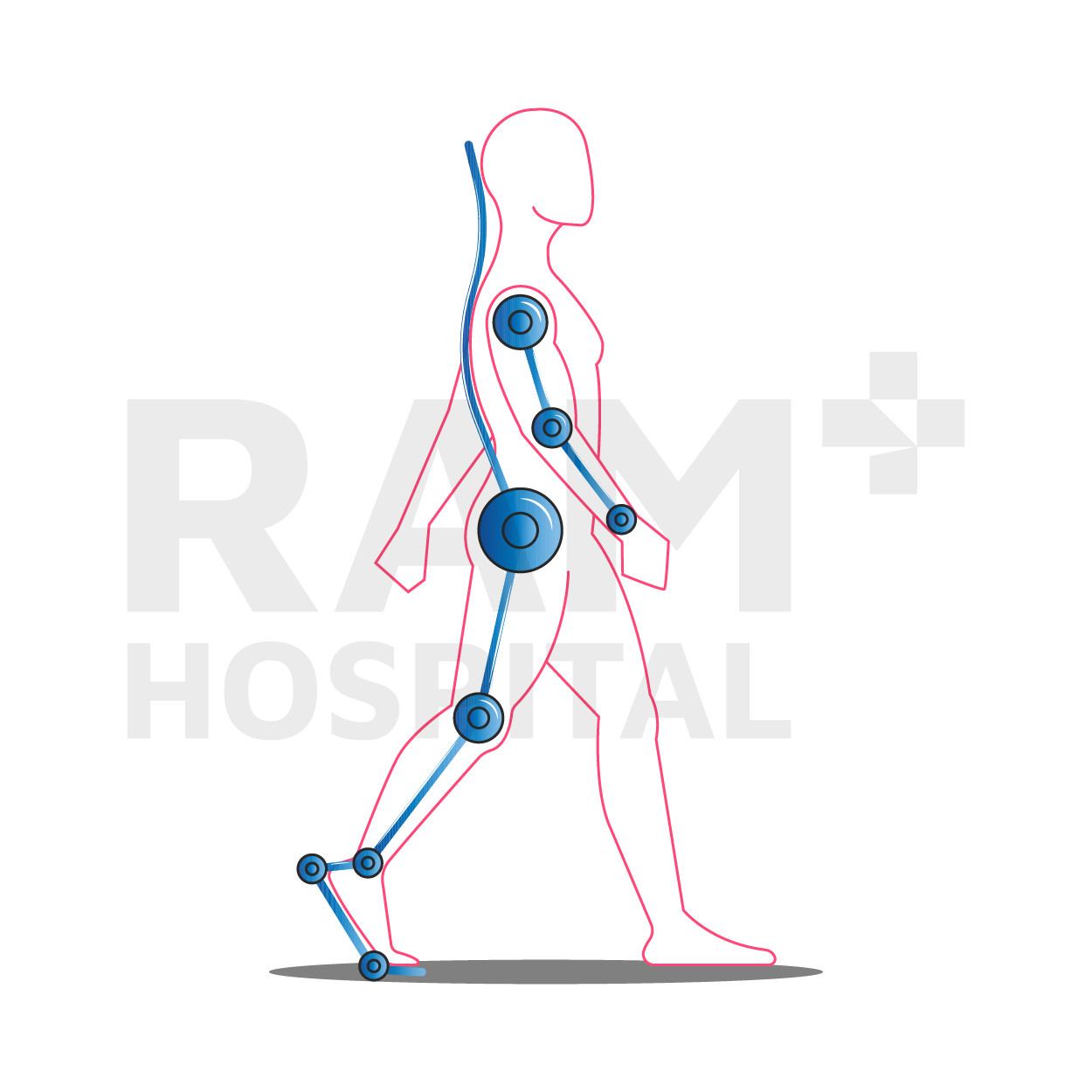
Combining exoskeleton training with physical therapy has been shown to improve walking ability and balance in stroke patients more effectively than physical therapy alone.
Ramkhamhaeng Hospital offers exoskeleton training for all stages of neurological recovery, from patients with severe weakness to those who want to improve their walking speed. The program includes:
For optimal results, patients should train with the exoskeleton 3-5 times a week for 2-6 weeks. Each session lasts 40-60 minutes. This method is proven to improve a patient's walking speed, endurance, and overall gait quality, as well as cardiovascular and respiratory health. The duration of treatment varies based on the severity of the condition and the patient's recovery progress.
Our advanced virtual reality robotic gait training is designed to assist recovery and improve mobility for:
Physical Therapy Department: Building 2, 2nd Floor Tel. 1512 ext. 2240, 2241
Physical Medicine and Rehabilitation (Rehabilitation Medicine)

PM & R

Physiatrist
Physical Medicine and Rehabilitation (Rehabilitation Medicine)