
พญ. ARUNRAT THONGINDAM, M.D.
Internal medicine, Endocrinology and Metabolism



Peripheral artery disease in the legs is a silent threat that often endangers the lives of diabetic patients. The main cause is fat deposits on arterial walls, leading to vascular inflammation, fibrosis, and calcium accumulation that cause arterial stenosis or occlusion. This results in inadequate blood supply to the legs.
Consequently, when patients develop a diabetic wound, they often feel no pain. The wound becomes hard to heal, eventually turning into black gangrenous tissue on the foot.
Surgical debridement of necrotic tissue or toe amputation alone usually fails to heal the wound completely and often causes it to spread further. Currently, treating diabetic foot wounds caused by arterial occlusion can be safely achieved through several methods. For patients with mild occlusion, oral medication may be sufficient.
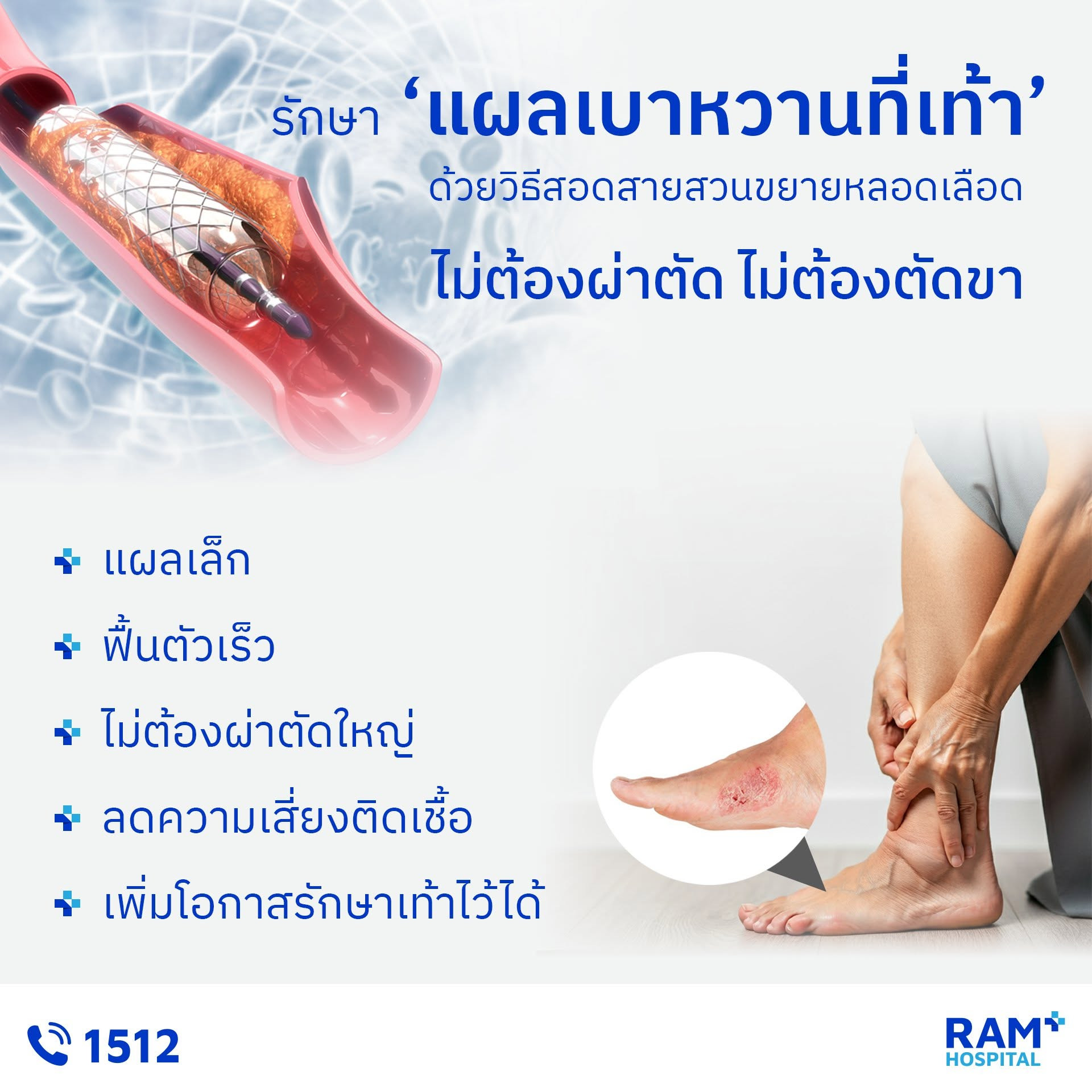
Doctors may consider balloon angioplasty / catheterization or vascular Bypass surgery to restore blood flow to the leg. This can be performed even when patients have extensive arterial blockages over long segments. These reliable and advanced medical technologies restore normal blood circulation without requiring major amputation or loss of limbs.
Diabetic patients should be cautious and pay special attention to foot care to prevent limb loss by following these simple steps:

Although diabetic patients can eat most general foods, paying careful attention to food selection and portion control is vital to significantly enhancing their quality of life.
Focus on high-fiber green leafy vegetables that are low in starch and sugar. These help delay and block the absorption of sugar and fat, such as morning glory, kale, cabbage, bitter melon, and legumes.
Choose low-sugar, high-fiber fruits such as guava, papaya, apples, tangerines, pomelo, and rose apples, with a recommended portion of 3-4 servings per day.
Drink plain milk, low-fat milk, skim milk, or unsweetened soy milk. Limit consumption to no more than 1-2 glasses/day (250 cc per glass).
Select minimally processed carbohydrates like brown rice, whole grains, and whole wheat bread, limited to 8-9 ladles/day. Avoid desserts and use caution with artificial sweeteners, as they may increase sugar cravings.
Focus on fish, lean meat, and skinless poultry, limited to no more than 12 tablespoons/day. Patients without high blood cholesterol can eat up to 2-3 eggs daily.
Choose foods prepared with healthy fats such as rice bran oil, soybean oil, or corn oil, limiting consumption to 6-7 teaspoons/day.

In addition to controlling blood sugar levels within normal limits, diabetic patients should avoid injuries. If a wound occurs, diligently practice and monitor self-care according to the following recommendations:
Internal medicine, Endocrinology and Metabolism

Endocrinology

Vascular surgery, Endovascular intervention, Transplantation


