
MATHEE LERTNANTAKUL, M.D.
CARDIOLOGY



Understanding every rhythm while monitoring every anomaly down to the second through wave lines—this is perhaps the clearest description of an electrocardiogram. Convenient and fast, this basic diagnostic test should be available at all medical facilities. Whenever you experience chest pain, sweating, palpitations, dizziness, feeling faint, or difficulty breathing, consulting a doctor for an examination is essential.
An Electrocardiogram (Electrocardiogram : EKG) is a preliminary test that detects electrical signals emitted by the heart with each beat to help diagnose potential conditions, such as heart failure or arrhythmias.


Doctors interpret electrocardiogram waveforms to identify abnormalities, such as checking whether the heart rate is regular or if upper and lower chamber activities are coordinated. This helps detect various heart diseases:

Even if EKG results appear normal, hidden heart conditions may still exist. When patients report palpitations but initial EKG shows no abnormalities, doctors often perform additional diagnostic tests:
The doctor begins by taking the patient’s medical history. The patient then rests comfortably on an examination bed. Medical staff cleans the skin and applies conductive gel before placing a total of 10 electrodes (Electrode) on the chest, arms, and legs. The machine processes and displays the electrocardiogram graph, with the entire procedure taking about 15 minutes.


During the examination, the machine receives electrical signals and translates them into a 12-lead EKG graph, which consists of:
Read more: Cardiac Arrhythmia Cardiac Arrhythmia
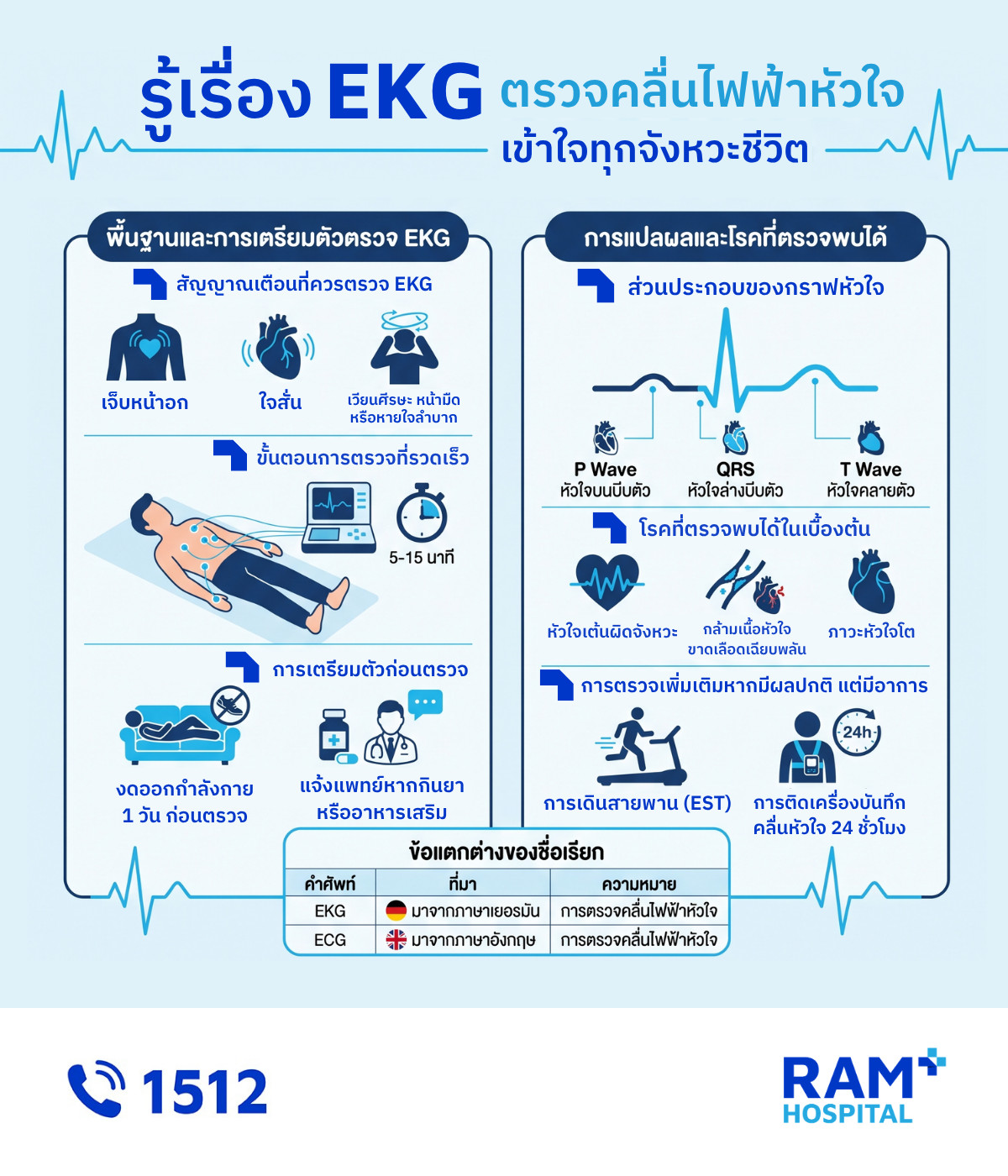
A: Both terms refer to the same electrocardiogram procedure. The minor difference comes from language origin; EKG stems from German spelling (Elektrokardiogramm), and EKG is often used to avoid confusion with an electroencephalogram (EEG).
A: Since an EKG only records the heart's electrical activity, it causes no pain or side effects. The procedure takes only 5 - 10 minutes, and patients can resume normal activities immediately afterwards.

Avoid heavy exercise for one day prior to the test, and please inform your doctor if you are taking any regular medications or dietary supplements for optimal test results.
Although highly effective, an EKG may need to be combined with other tests to diagnose a broader range of conditions. If symptoms point toward a specific disorder, doctors may recommend additional procedures, such as Cardiac Catheterization / Coronary Angiography
CARDIOLOGY

Exercise Physiology.

Medicine - Cardiology (Heart)

CARDIOLOGY