
WORALUG PANUMATRASSAMEE, M.D.
Pediatric Pediatric Dermatology



Even though we hold our little ones gently in our arms, one thing that causes new mothers quite a bit of concern is seeing "yellow crusts on the baby's head" or oily patches sticking to the scalp. I want to reassure mothers that this condition is a common natural occurrence that can be managed with the right understanding.
Cradle Cap is frequently found in newborns up to 3 months of age. It appears as oily patches of yellowish or white scales firmly attached to the scalp. Sometimes, it can spread to the eyebrows or behind the ears. Medically, this condition is known as "Cradle Cap," which is a specific form of “Seborrheic Dermatitis” that occurs in infants.
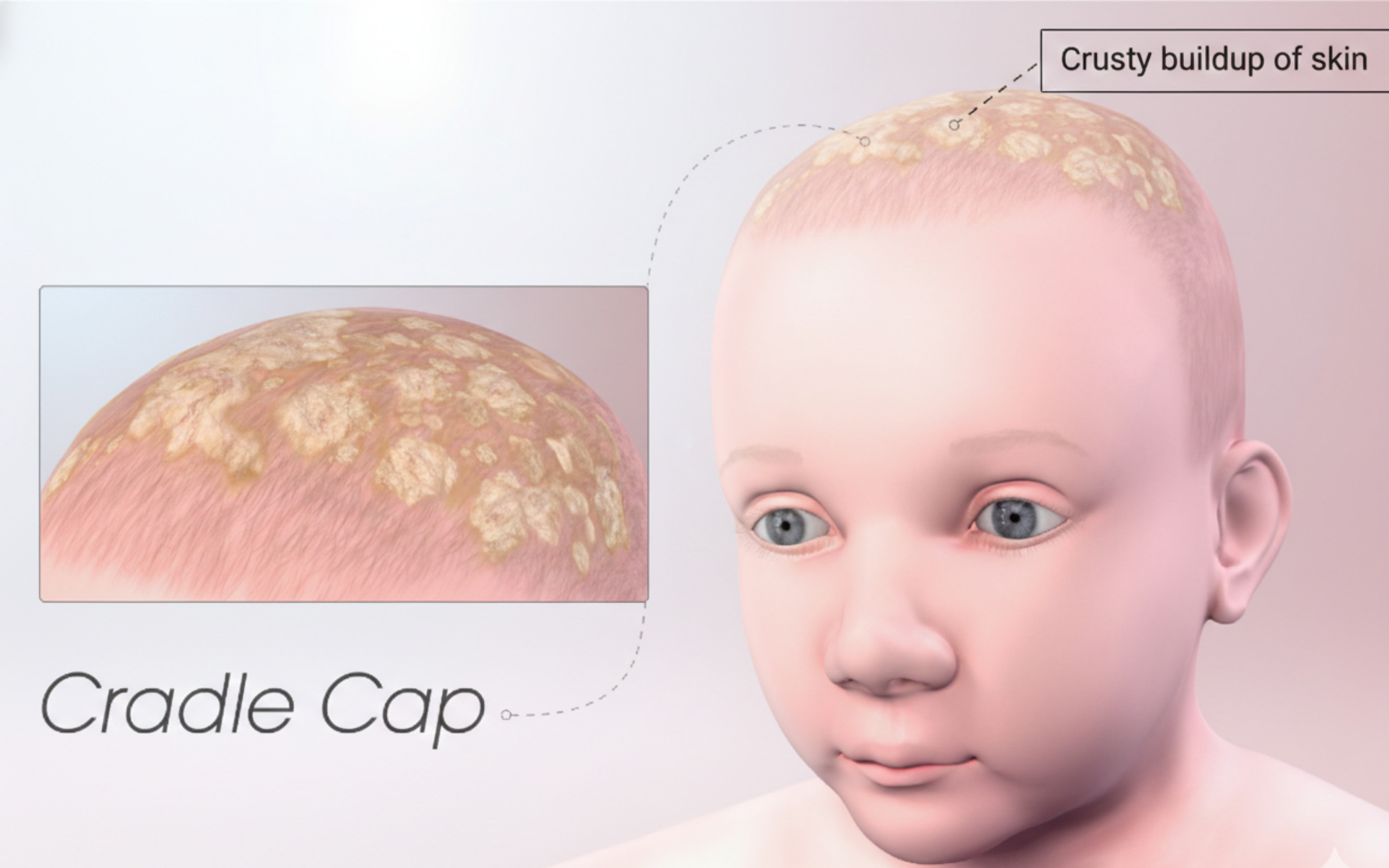
(Image Ref: https://www.scientificanimations.com/cradle-cap-symptoms-causes-treatment/uncategorized/)
The crusty scales on a baby's head are not a scary abnormality or caused by a lack of cleanliness as many might understand. Instead, it is Infantile Seborrheic Dermatitis that occurs due to the influence of maternal hormones still present in the baby's body. These hormones stimulate the oil glands to work more than usual during the early stages of life.
Although it may not look pleasant, cradle cap usually doesn't cause any pain or itching for the little one. The skin in that area may look slightly reddish under the scales, like a shedding leaf waiting to reveal healthy new skin. The most important thing is patience. I do not recommend picking or scratching those scales off forcefully, as it can lead to inflammation and injury to the baby's delicate skin.
When you bring your baby to see the doctor, I will perform a meticulous examination to differentiate whether those scales are just common infantile seborrheic dermatitis or if there are other conditions involved, such as Atopic Dermatitis or a fungal infection. An accurate diagnosis from the start helps us create a focused care plan without having to rely on trial and error that might irritate the baby's skin.
Gentle care is the key. Simply apply a few drops of pure baby oil and massage gently, leaving it to soften the crusts. Then, wash it off with a mild baby shampoo. With this, the scales will gradually peel off naturally.
However, if you find that the rash starts to become very red, spreads, or has fluid leaking, seeing a pediatrician for treatment is important. The doctor may consider using topical antifungal creams or antibiotics as appropriate to restore the baby's skin to its clear, smooth state so they can smile happily once again.
Pediatric Pediatric Dermatology

Dermatology

Pediatrics Pediatrics Gastroenterology and Hepatology

Dermatologic Surgery & Lasers


