

蓝康恒医院糖尿病足治疗中心由糖尿病及糖尿病足护理专业医师与医疗团队提供糖尿病足的护理及治疗服务。医院坚持以现代化治疗技术与适宜的治疗方案为糖尿病患者提供诊疗,降低伤口恶化风险,帮助患者高效康复。同时提供足部健康护理咨询,预防日后出现相关问题。
疑似患有此病的患者,例如行走时出现下肢疼痛、麻木,或足部伤口超过两周未愈合者,除每位患者均需进行的病史询问与体格检查外,还需接受踝肱指数(Ankle‑Brachial Index,简称 ABI) 检测,即腿部与手臂血压的对比测量。该检查可初步判断患者是否存在隐匿性病变,尤其适用于症状不明确或无症状的患者。
利用 ABI 仪器检查外周动脉阻塞情况,可快速得出结果,检查前无需禁食禁水。


糖尿病患者除了会出现下肢血管狭窄、堵塞的问题外,糖尿病本身还会同时导致足部麻木。然而,足部的伤口常常被忽视,因为患者感觉不到伤口处的疼痛。等到察觉时,伤口可能已经恶化、感染,严重到需要截肢。部分患者会出现严重感染,甚至危及生命。单纯切除脚趾或坏死组织,往往无法让伤口愈合,反而可能使伤口进一步恶化,最终导致截肢。因此,这类病症必须接受正确规范的治疗,才能保住肢体。
因血管狭窄、闭塞引起的糖尿病足溃疡,治疗方法有多种。狭窄程度较轻的患者可先采用药物治疗;若病变程度加重,则需接受更积极的治疗,例如血管成形术、血管搭桥手术,以恢复下肢供血。血管成形术的优势在于无需开刀,仅类似抽血般的微小创口,还能加快患者康复速度。
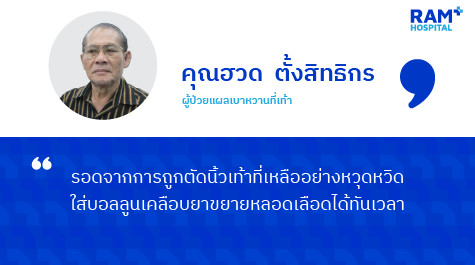
"Mr. Huat Tang Sittikorn, who is 71 years old, told me that he had diabetes for 37 years. While the foot wound just happened a few years ago, with his daughter Ms. Siriporn helping to burden him. Taking care of the wound itself, brought him to the clinic and hospital. At first, the wound was only on the thumb but it treats for a year and still hasn't healed. And there are still more wounds until 4 toes have been amputated and the wound is beginning to spread to the fifth finger."
His relatives were seen on TV shows that at Ramkhamhaeng Hospital, there is a technique to widen blood vessels to help heal diabetic wounds. Therefore hurriedly brought him to contact for treatment immediately.
After Dr. Suthat accepted him for a thorough examination. Explained that it is caused by veins in the legs, which means the end of the blood vessel is blocked causing the blood to not flow to the toe. Therefore causing the wound that occurs that cannot be healed And the nerves in that area will not be perceived. He does not feel pain in the wound. And brought him to the color injection to see the condition of the peripheral vascular. It was found that the stenosis area was below the knee, and his veins or blood vessels had already become completely blocked by 2 of the 3 and the remaining ones were clogged at intervals. Includes 2 positions, each of which is 8 cm and 12 cm long.
Our doctors inserting the balloon into the blood vessels up to the constricted position and pumping air into it, inflating the balloon all around, resulting in immediate inflation of the blocked blood vessel, allowing blood to reach the toe. In time to survive the amputation of the remaining toe.
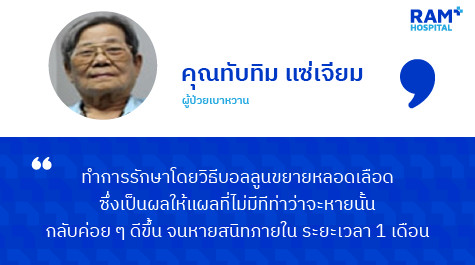
She had been living with diabetes for over 20 years and had previously developed a chronic foot ulcer that failed to heal, eventually requiring the amputation of four toes.
Not long afterward, a small red spot appeared on the sole of his foot, resembling a mosquito bite, which later developed into a wound. Despite regular cleaning and wound care, there were no signs of healing.
Approximately 6–7 months later, the affected toe became swollen and red, and his mother noticed that she was experiencing pain in the toe. She then took him to see a physician at Ramkhamhaeng Hospital.
After evaluation, the physician explained that the condition was caused by peripheral arterial disease. Treatment was performed using balloon angioplasty to dilate the narrowed blood vessels. As a result, the previously non-healing wound gradually improved and completely healed within one month.
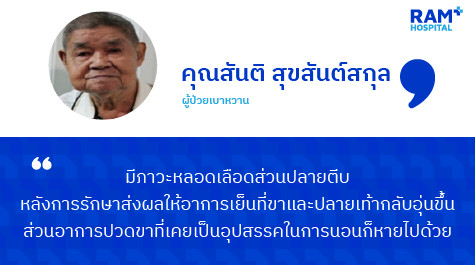
He had been living with diabetes for many years when he suddenly began to experience leg pain. When he touched his leg and toes, he noticed that they felt abnormally cold, as if standing on ice. Even using an electric blanket provided no relief.
These symptoms occurred mostly at night, preventing him from sleeping and forcing him to rely on sleeping medication every night. Eventually, his daughter, who was his primary caregiver, could no longer bear to see him suffer and took him to consult a physician at Ramkhamhaeng Hospital.
After examination, he was diagnosed with peripheral arterial disease. Following treatment, the cold sensation in his legs and toes improved, becoming warm again, and the leg pain that had interfered with his sleep completely resolved.
 "แผลเบาหวาน" ที่เกิดจากหลอดเลือดตีบตัน
 "แผลเบาหวานที่เท้า"...รักษาได้!
 สาเหตุการเกิดภาวะแทรกซ้อน จากแผลเบาหวาน
 เทคโนโลยีการรักษาแผลเบาหวานที่เท้า
 นวัตกรรมการรักษาแผลเบาหวานที่เท้า
 นวัตกรรมรักษาเบาหวาน ไม่ต้องตัดขา
 เส้นเลือดขอด
 แผลเบาหวานที่เท้า
 นวัตกรรมการรักษาแผลเบาหวานที่เท้า
 เบาหวานภัยที่มากับน้ำท่วม
 แผลเบาหวานที่เท้า โรคที่มากับน้ำท่วม
 ภาวะแทรกซ้อนโรคเบาหวานที่เท้า
 อันตรายของแผลเบาหวานที่เท้า
 การรักษาภาวะหลอดเลือดส่วนปลายตีบ
 โรคแทรกซ้อนจากแผลเบาหวานที่เท้า

"Mr. Huat Tang Sittikorn, who is 71 years old, told me that he had diabetes for 37 years. While the foot wound just happened a few years ago, with his daughter Ms. Siriporn helping to burden him. Taking care of the wound itself, brought him to the clinic and hospital. At first, the wound was only on the thumb but it treats for a year and still hasn't healed. And there are still more wounds until 4 toes have been amputated and the wound is beginning to spread to the fifth finger."
His relatives were seen on TV shows that at Ramkhamhaeng Hospital, there is a technique to widen blood vessels to help heal diabetic wounds. Therefore hurriedly brought him to contact for treatment immediately.
After Dr. Suthat accepted him for a thorough examination. Explained that it is caused by veins in the legs, which means the end of the blood vessel is blocked causing the blood to not flow to the toe. Therefore causing the wound that occurs that cannot be healed And the nerves in that area will not be perceived. He does not feel pain in the wound. And brought him to the color injection to see the condition of the peripheral vascular. It was found that the stenosis area was below the knee, and his veins or blood vessels had already become completely blocked by 2 of the 3 and the remaining ones were clogged at intervals. Includes 2 positions, each of which is 8 cm and 12 cm long.
Our doctors inserting the balloon into the blood vessels up to the constricted position and pumping air into it, inflating the balloon all around, resulting in immediate inflation of the blocked blood vessel, allowing blood to reach the toe. In time to survive the amputation of the remaining toe.
She had been living with diabetes for over 20 years and had previously developed a chronic foot ulcer that failed to heal, eventually requiring the amputation of four toes.
Not long afterward, a small red spot appeared on the sole of his foot, resembling a mosquito bite, which later developed into a wound. Despite regular cleaning and wound care, there were no signs of healing.
Approximately 6–7 months later, the affected toe became swollen and red, and his mother noticed that she was experiencing pain in the toe. She then took him to see a physician at Ramkhamhaeng Hospital.
After evaluation, the physician explained that the condition was caused by peripheral arterial disease. Treatment was performed using balloon angioplasty to dilate the narrowed blood vessels. As a result, the previously non-healing wound gradually improved and completely healed within one month.
He had been living with diabetes for many years when he suddenly began to experience leg pain. When he touched his leg and toes, he noticed that they felt abnormally cold, as if standing on ice. Even using an electric blanket provided no relief.
These symptoms occurred mostly at night, preventing him from sleeping and forcing him to rely on sleeping medication every night. Eventually, his daughter, who was his primary caregiver, could no longer bear to see him suffer and took him to consult a physician at Ramkhamhaeng Hospital.
After examination, he was diagnosed with peripheral arterial disease. Following treatment, the cold sensation in his legs and toes improved, becoming warm again, and the leg pain that had interfered with his sleep completely resolved.