
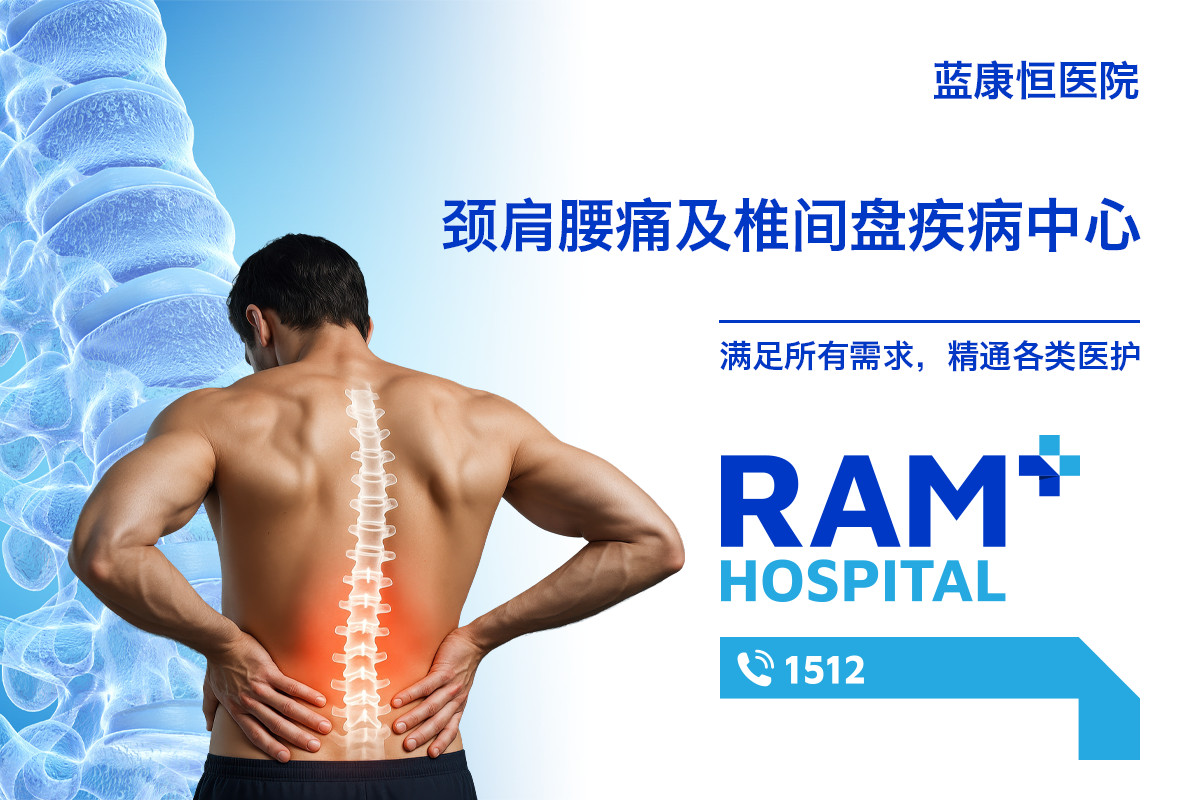
经 20 余年随访结果显示,人工椎间盘的使用寿命可观,且极少出现磨损情况。 提先针对每位患者的个体情况评估手术的适配性后,专业的脊柱外科医生会为患者实施手术。
医生会为患者制定个性化的治疗方案,可选的治疗方式包括:
随着手术方式及手术器械的研发与改进,该手术治疗效果理想,且能有效降低术后并发症风险,手术切口小、患者恢复快,同时可从根源上治疗病症,具体优势如下:
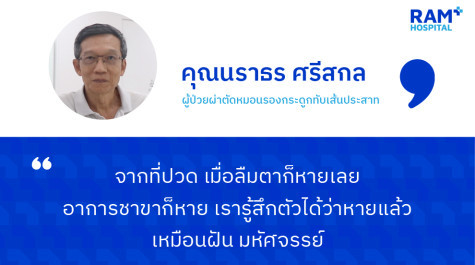
A patient who underwent surgery for a herniated disc compressing the nerve.
Mr. Narathorn Srisakon – Interview
“Before the surgery I was in a lot of pain. But when I opened my eyes after the operation, the pain was gone immediately. The numbness in my leg was gone as well. I could clearly feel that it had disappeared. It felt like a dream—truly amazing.”
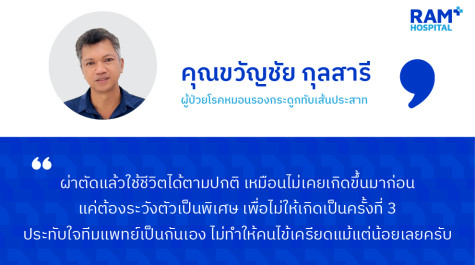
“After the surgery, I was able to return to normal life as if nothing had ever happened. I just need to be extra careful to prevent it from happening a third time.”
The sign that the condition had returned was pain in the same area, whether sitting or walking. The cause was lifting heavy objects and continuing the same lifestyle habits. My first surgery made the decision for the second surgery much easier. The first time, I felt very anxious, but the second time I decided to see the doctor right away.
The doctor advised me to strictly follow proper self-care practices to avoid a third occurrence. I was very impressed with the medical team — they were friendly and made me feel completely at ease without any stress at all.
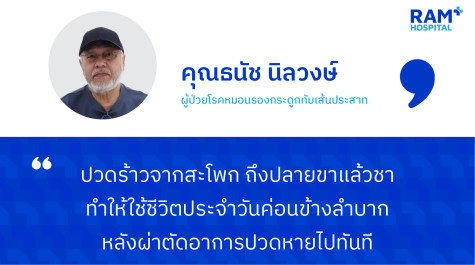
“The pain radiated from my hip down to my leg with numbness, making daily life very difficult. After the surgery, the pain disappeared immediately.”
The pain radiated from my hip down to the tip of my leg, along with numbness, which made everyday activities quite difficult. The surgery took approximately 3 hours, followed by about 2 hours of recovery time. Immediately after the operation, the pain was gone.
At present, my condition has improved by around 90%. The remaining 10% is slight stiffness and numbness. The doctor explained that it will take some more time for the symptoms to fully improve.
There’s no need to hesitate. The doctor is highly skilled and truly trustworthy. I have always received treatment at Ramkhamhaeng Hospital, and this time I chose to be treated by a well-known specialist, which gave me great confidence in the care I received.
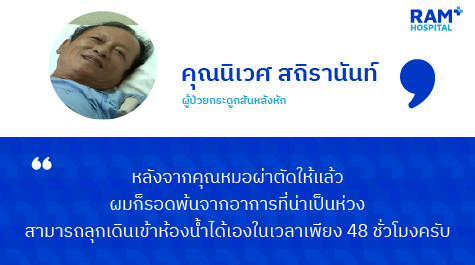
A Swift Recovery
Niwet Sathiranun, a 63-year-old from Chonburi, shared his remarkable recovery story. Just 48 hours after spinal surgery for a fracture, he was able to get up and walk to the bathroom independently.
Mr. Sathiranun's injury occurred when he fell nearly two meters from a ladder while pruning a tree. Despite no one witnessing the fall, he managed to get up and drive himself the 200 meters back home. He then explained the situation to his wife, who promptly called for an ambulance from Ramkhamhaeng Hospital.
Upon arrival at the hospital, he was unable to urinate. A detailed medical history and an MRI revealed a broken vertebra from the impact, leading doctors to recommend immediate corrective surgery.
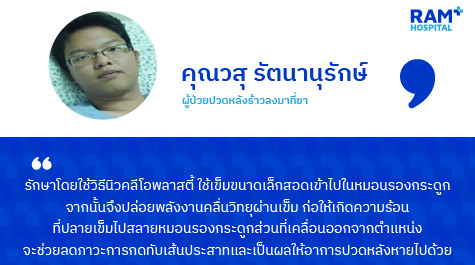
He suffered an accident while lifting heavy objects, which resulted in lower back pain radiating down his left leg. The pain gradually became more severe, yet he endured it for over a year. During that time, he sought treatment at several hospitals, but there was no significant improvement.
One contributing factor may have been his genetic predisposition, as his intervertebral discs were thinner than average, making the condition more difficult to resolve despite multiple treatment approaches.
Eventually, he was advised to consult a physician at Ramkhamhaeng Hospital. Dr. Surasak Inthachuen explained that the patient’s pain was caused by a herniated disc compressing a nerve. Although he had previously undergone various treatments—such as medication, physical therapy, and acupuncture—he did not respond to these methods.
The physician therefore recommended treatment with nucleoplasty, a minimally invasive procedure in which a small needle is inserted into the affected disc. Radiofrequency energy is then delivered through the needle, generating heat at its tip to remove the portion of the disc that has herniated. This reduces nerve compression, resulting in relief from back pain.
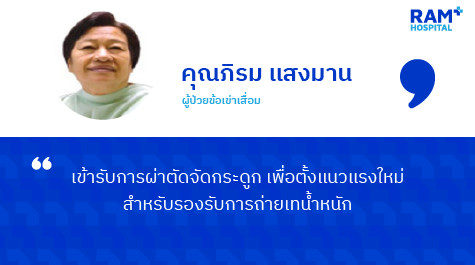
She had endured knee pain for more than three years before deciding to seek medical care. Initially, the symptoms were caused by the nature of her job, which required prolonged standing, leading to tendon inflammation, combined with pre-existing knee osteoarthritis. As a result, the pain did not subside.
Moreover, over the past 5–6 months, the symptoms progressively worsened to the point where she was unable to walk. Following a recommendation from a colleague, she consulted a physician at Ramkhamhaeng Hospital, where she was diagnosed with knee osteoarthritis.
Common symptoms in such patients include severe knee pain, leg deformities such as bowlegs or knock-knees, difficulty walking, and an increased risk of falls. After careful consideration, the physician determined that the patient was still relatively young and not yet suitable for knee replacement surgery.
Instead, the doctor recommended corrective osteotomy, a surgical procedure to realign the bones and redistribute weight-bearing forces. This involved placing a metal fixation device in the leg to correct the bowing and restore normal alignment. At the same time, this treatment helps delay the need for knee replacement, as proper leg alignment reduces uneven stress on the knee joint and slows the progression of degeneration to some extent.
 การผ่าตัดกระดูกสันหลังผ่านกล้อง Endoscope
 โรคหมอนรองกระดูกสันหลัง กับ เทคโนโลยีผ่าตัดส่องกล้อง ENDOSCOPE
 "ปวดหลังร้าวลงขา" อาจมาจากหมอนรองกระดูกสันหลังทับเส้นประสาท
 การรักษาหมอนรองกระดูกสันหลัง ด้วยการผ่าตัดผ่านกล้อง Endoscope
 เทคโนโลยีการรักษา "ช่องไขสันหลังตีบ"
 เทคโนโลยีรักษาหมอนรองกระดูกคอทับเส้นประสาท
 เทคโนโลยีการรักษาอาการปวดไหล่
 เทคโนโลยีการรักษาหมอนรองกระดูกสันหลัง
 เทคโนโลยีการรักษาหมอนรองกระดูกสันหลังแบบแผลเล็ก
 โรคหมอนรองกระดูกสันหลังส่วนเอว

A patient who underwent surgery for a herniated disc compressing the nerve.
Mr. Narathorn Srisakon – Interview
“Before the surgery I was in a lot of pain. But when I opened my eyes after the operation, the pain was gone immediately. The numbness in my leg was gone as well. I could clearly feel that it had disappeared. It felt like a dream—truly amazing.”
“After the surgery, I was able to return to normal life as if nothing had ever happened. I just need to be extra careful to prevent it from happening a third time.”
The sign that the condition had returned was pain in the same area, whether sitting or walking. The cause was lifting heavy objects and continuing the same lifestyle habits. My first surgery made the decision for the second surgery much easier. The first time, I felt very anxious, but the second time I decided to see the doctor right away.
The doctor advised me to strictly follow proper self-care practices to avoid a third occurrence. I was very impressed with the medical team — they were friendly and made me feel completely at ease without any stress at all.
“The pain radiated from my hip down to my leg with numbness, making daily life very difficult. After the surgery, the pain disappeared immediately.”
The pain radiated from my hip down to the tip of my leg, along with numbness, which made everyday activities quite difficult. The surgery took approximately 3 hours, followed by about 2 hours of recovery time. Immediately after the operation, the pain was gone.
At present, my condition has improved by around 90%. The remaining 10% is slight stiffness and numbness. The doctor explained that it will take some more time for the symptoms to fully improve.
There’s no need to hesitate. The doctor is highly skilled and truly trustworthy. I have always received treatment at Ramkhamhaeng Hospital, and this time I chose to be treated by a well-known specialist, which gave me great confidence in the care I received.
A Swift Recovery
Niwet Sathiranun, a 63-year-old from Chonburi, shared his remarkable recovery story. Just 48 hours after spinal surgery for a fracture, he was able to get up and walk to the bathroom independently.
Mr. Sathiranun's injury occurred when he fell nearly two meters from a ladder while pruning a tree. Despite no one witnessing the fall, he managed to get up and drive himself the 200 meters back home. He then explained the situation to his wife, who promptly called for an ambulance from Ramkhamhaeng Hospital.
Upon arrival at the hospital, he was unable to urinate. A detailed medical history and an MRI revealed a broken vertebra from the impact, leading doctors to recommend immediate corrective surgery.
He suffered an accident while lifting heavy objects, which resulted in lower back pain radiating down his left leg. The pain gradually became more severe, yet he endured it for over a year. During that time, he sought treatment at several hospitals, but there was no significant improvement.
One contributing factor may have been his genetic predisposition, as his intervertebral discs were thinner than average, making the condition more difficult to resolve despite multiple treatment approaches.
Eventually, he was advised to consult a physician at Ramkhamhaeng Hospital. Dr. Surasak Inthachuen explained that the patient’s pain was caused by a herniated disc compressing a nerve. Although he had previously undergone various treatments—such as medication, physical therapy, and acupuncture—he did not respond to these methods.
The physician therefore recommended treatment with nucleoplasty, a minimally invasive procedure in which a small needle is inserted into the affected disc. Radiofrequency energy is then delivered through the needle, generating heat at its tip to remove the portion of the disc that has herniated. This reduces nerve compression, resulting in relief from back pain.
She had endured knee pain for more than three years before deciding to seek medical care. Initially, the symptoms were caused by the nature of her job, which required prolonged standing, leading to tendon inflammation, combined with pre-existing knee osteoarthritis. As a result, the pain did not subside.
Moreover, over the past 5–6 months, the symptoms progressively worsened to the point where she was unable to walk. Following a recommendation from a colleague, she consulted a physician at Ramkhamhaeng Hospital, where she was diagnosed with knee osteoarthritis.
Common symptoms in such patients include severe knee pain, leg deformities such as bowlegs or knock-knees, difficulty walking, and an increased risk of falls. After careful consideration, the physician determined that the patient was still relatively young and not yet suitable for knee replacement surgery.
Instead, the doctor recommended corrective osteotomy, a surgical procedure to realign the bones and redistribute weight-bearing forces. This involved placing a metal fixation device in the leg to correct the bowing and restore normal alignment. At the same time, this treatment helps delay the need for knee replacement, as proper leg alignment reduces uneven stress on the knee joint and slows the progression of degeneration to some extent.