Messenger

Food Poisoning : The Uncommon Thread

June 23 / 2026

food poisoning


     Food poisoning is a condition caused by consuming food or water contaminated with pathogens, leading to nausea, vomiting, abdominal pain, and watery diarrhea. Food poisoning can occur in people of all ages, from young children to the elderly. Generally, food poisoning is a mild condition that resolves on its own. However, severe cases can lead to a significant loss of fluids and electrolytes.


Causes of Food Poisoning

Most food poisoning cases are caused by ingesting food and drinking water contaminated with bacteria, viruses, or parasites. The common pathogens that cause food poisoning include:  


  • Salmonella (Salmonella) commonly found in raw meat, raw eggs, milk, and dairy products.
  • Escherichia Coli (Escherichia Coli) or E. coli (E. Coli) certain strains, mostly found in raw meat.
  • Clostridium Botulinum (Clostridium Botulinum) this bacteria thrives in low-oxygen environments. It is often found in tightly sealed containers that have undergone unhygienic manufacturing processes, such as canned bamboo shoots, pickled bamboo shoots, pickled mustard greens, and processed meats.
  • Shigella (Shigella) found as a contaminant in fresh food products, unclean drinking water, and fresh food touched directly by an infected person.
  • Enteric Viruses (Enteric Viruses) which commonly contaminate fresh food, shellfish, and unclean drinking water.


Symptoms of Food Poisoning

Most infected individuals will manifest symptoms within 1-2 days, depending on the type and amount of pathogens ingested. Patients may show symptoms within a few hours after eating, or up to a week later if infected with severe pathogens. The symptoms of food poisoning include:
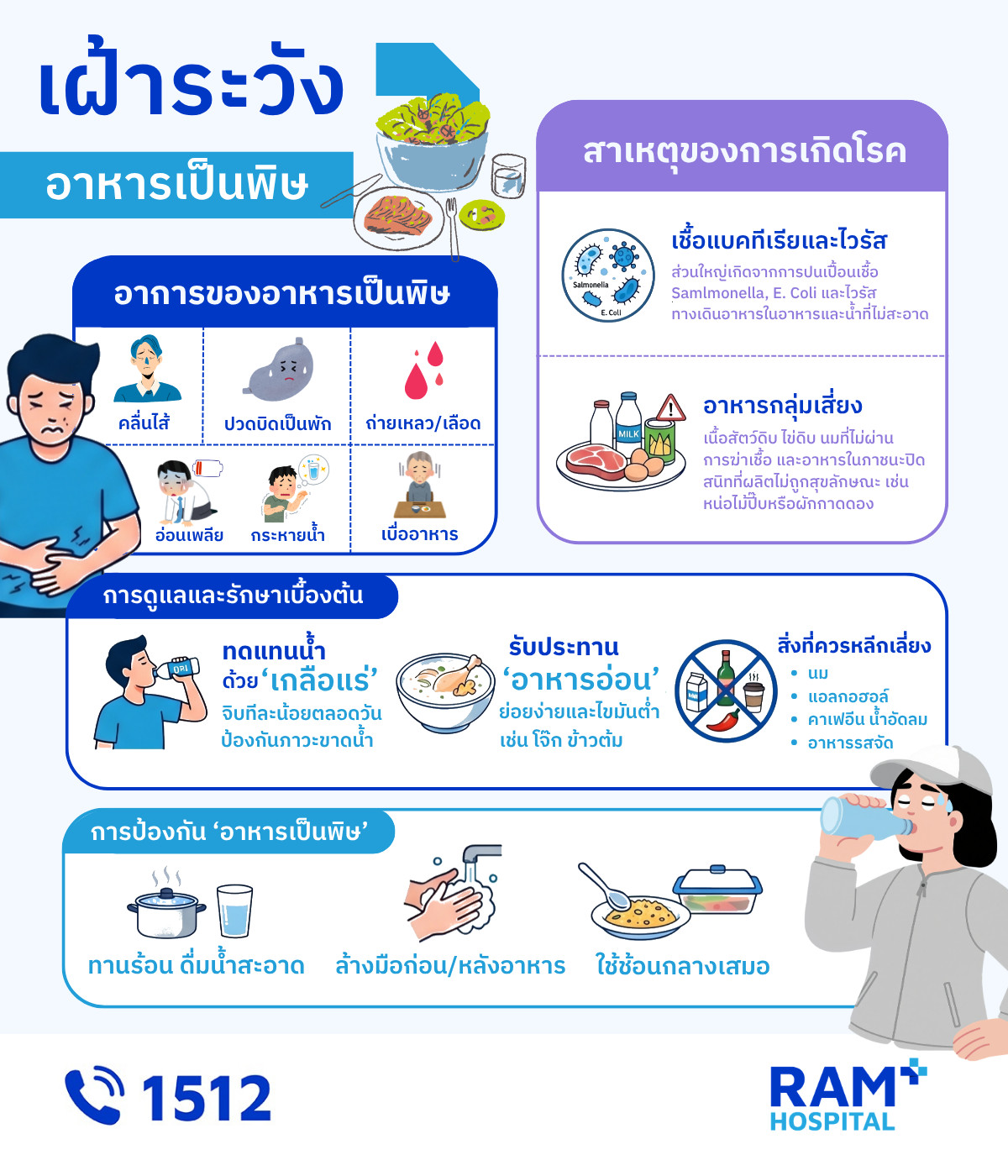
 

  • Feeling queasy, nauseous, or vomiting multiple times, or vomiting severely enough to cause bleeding.
  • Intermittent, cramping abdominal pain due to intestinal contractions.
  • Loose, watery stools, or stools mixed with mucus or blood.
  • Loss of appetite.
  • Dehydration symptoms such as fatigue, weakness, dizziness, lack of energy, dry mouth, sunken eyes, frequent thirst, or low urine output.
  • Fever.


Food Poisoning


Prevention of Food Poisoning

  • Drink clean water.
  • Eat clean, fully cooked food.
  • Wash hands thoroughly with soap before eating.
  • Avoid eating leftover food from previous nights.
  • Keep food safe from insects, rodents, and other animals.
  • Separate raw and cooked food to prevent cross-contamination.
  • Always wash hands thoroughly before cooking or preparing snacks.
  • Use serving spoons.


Treatment for Food Poisoning

Usually, if symptoms are mild, patients can recover on their own within 24-48 hours through symptomatic treatment and by following these recommendations:


  • Get sufficient rest and ensure the body does not become dehydrated.
  • Drink water mixed with oral rehydration salts (ORS) to replace fluids and certain minerals lost from vomiting and diarrhea. Sip a small amount throughout the day alongside normal eating, and continue drinking until vomiting stops or stools return to a solid state.
  • Take antidiarrheal medication. Patients may use antidiarrheal drugs under the guidance of a doctor or pharmacist to help relieve diarrhea symptoms in conjunction with drinking water and ORS solution, which is the main treatment.
  • Once symptoms improve, eat soft, easily digestible, and low-fat foods such as rice soup or porridge. Avoid food and beverages containing milk, alcohol, caffeine, carbonated drinks, high-fat foods, and spicy or heavily seasoned foods.
  • Refrain from drinking milk while experiencing diarrhea.


Although it is generally a mild condition that can resolve on its own, there is still a possibility of severe symptoms developing. Therefore, you should seek immediate medical attention if necessary.