Overactive Bladder (OAB) is a condition where the bladder responds more quickly than normal, causing the bladder muscles to contract frequently. This leads to frequent urination throughout the day and night, regardless of how much water is consumed. It results in discomfort, lack of confidence, and anxiety, and disrupts daily life. It is more common in women than men and can be found in individuals aged 30-40, especially those over 50.
Risk Factors for Overactive Bladder
The exact cause is still unclear, but several factors may contribute to OAB, such as:
- Weak pelvic muscles: make it difficult to control urination effectively.
- Nerve damage: causes communication problems between the brain and the bladder due to various causes.
- Medication use, alcohol, and caffeine consumption: which can interfere with brain function and cause the bladder to overflow. Diuretics and caffeinated drinks also make the bladder fill quickly and can lead to incontinence.
- Infections: especially urinary tract infections, can affect nerve function and cause uncontrollable bladder contractions.
- Overweight: where excess body weight puts pressure on the bladder, leading to incontinence.
- Hormonal changes: especially estrogen deficiency during menopause, can affect the urgency of urination.
Symptoms of Overactive Bladder
The condition results in various symptoms, including:
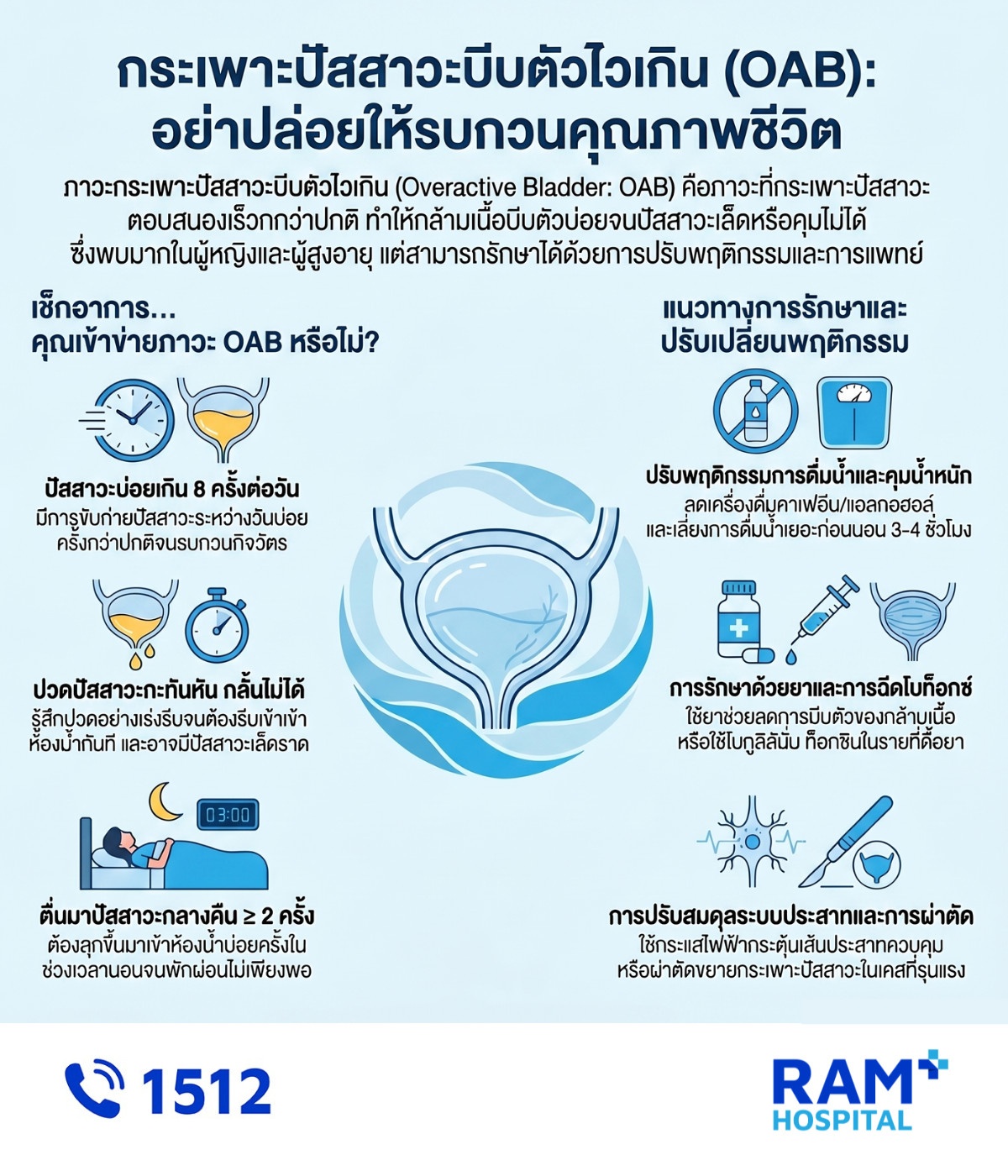
- Sudden urge to urinate and inability to hold urine for long periods.
- Increased frequency of urination, more than 8 times a day.
- Incontinence or leakage when feeling the urge to urinate.
- Frequent nighttime urination, waking up at least twice a night to urinate.
Treatment for Overactive Bladder
The most effective treatment requires a combination of approaches, including:
- Medications: to reduce bladder muscle contractions.
- Botulinum toxin injections into the bladder muscle: can be relieved for 5-9 months, after which a follow-up may be required if necessary. This can be considered for patients who do not respond to oral medications or want to reduce the side effects of medication.
- Neuromodulation: balances the nerve system controlling the bladder, using techniques like acupuncture, electrical patches, or surgery to implant electronic devices to stimulate the nerves responsible for bladder control.
- Bladder augmentation surgery: is a treatment for severe cases where other methods are ineffective. It helps increase bladder capacity and reduces pressure on the bladder.