SRISUPA LAOPAKORN, M.D.
Gynecologic Oncology Gynecologic Laparoscopic Surgery Sexual Medicine



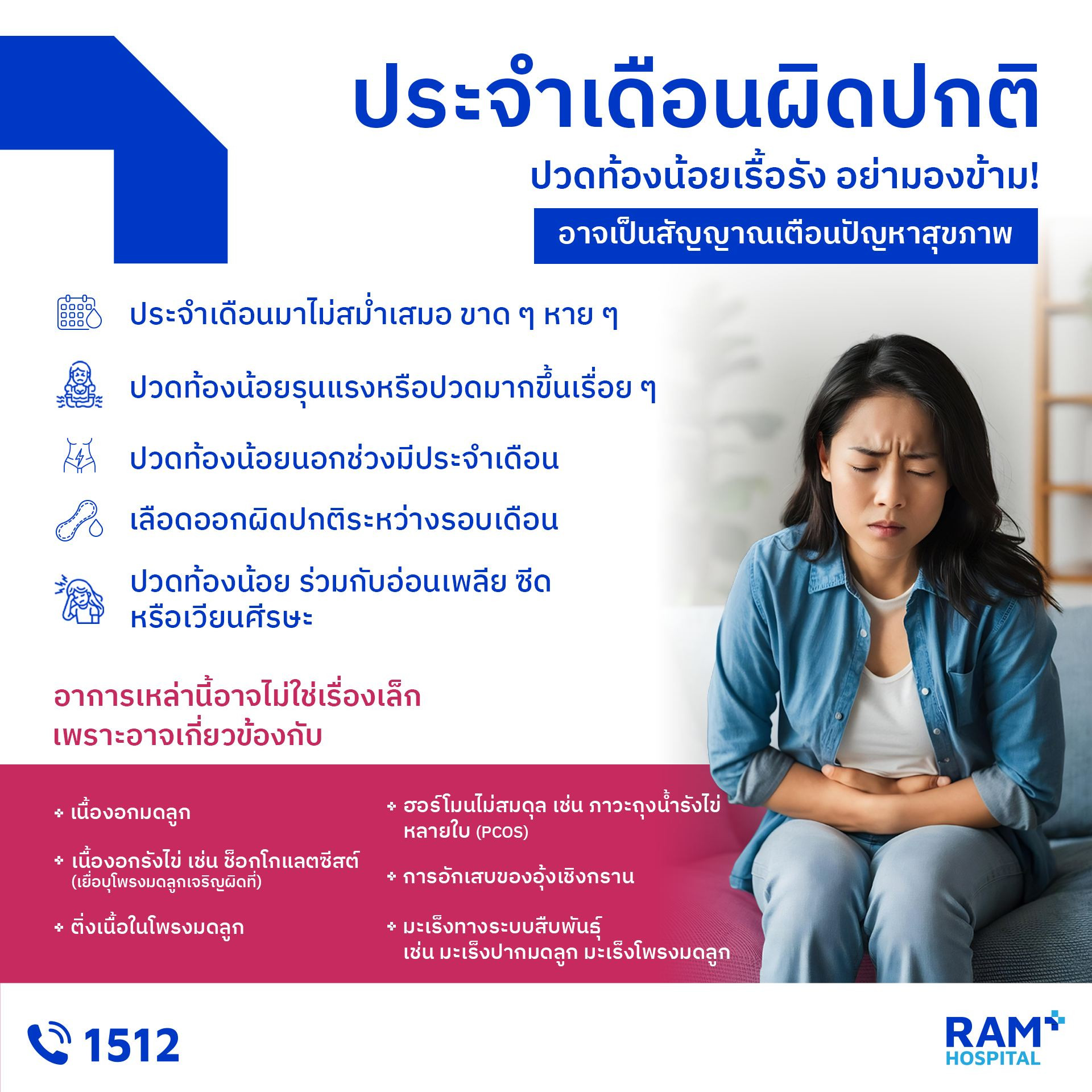
Irregular menstruation (Irregular bleeding) and abnormal bleeding in women can be categorized into 3 patterns:
Abnormal bleeding symptoms can range from heavy, light, frequent, infrequent, spotting, or no period at all. Sometimes it occurs after intercourse and may be accompanied by other conditions like fever or abdominal pain. In cases of prolonged or acute blood loss, it may lead to anemia, causing fatigue, exhaustion, or dizziness.
For example, adenomyosis (endometriosis in the uterine muscle), uterine fibroids, endometrial polyps, or in some cases, cancer or malignancy.
Hormonal imbalance groups, such as Polycystic Ovary Syndrome (PCOS), blood clotting disorders (from anticoagulants or genetics), use of contraceptives or hormonal medications, or uterine infections. These can cause heavy, irregular bleeding and may include other symptoms like fever or pelvic pain.
Therefore, diagnosis requires a medical history, physical examination, and screening for other related diseases.
Patients need to control current blood loss and prevent abnormal bleeding in future cycles. Treatment is divided into 2 parts:
Most importantly, overall health should be addressed, including reducing stress, weight control, exercise, and eating a healthy diet.
Gynecologic Oncology Gynecologic Laparoscopic Surgery Sexual Medicine

Gynecologic Oncology, Obstetrics - Gynecology

GYN-ONCO

OB-GYN, Gynecologic Oncology