KAMIN HARINWAN, M.D.
Gastroenterology


When gallstones start showing warning signs or inflammation occurs, "cholecystectomy" (gallbladder removal surgery) is the standard option to stop the cycle of pain and prevent dangerous complications. However, today's advanced technology allows doctors to treat patients more conveniently with the innovative Laparoscopic Cholecystectomy (LC).
Laparoscopic Cholecystectomy is a technique developed to reduce post-treatment risks. The surgeon makes 3-4 small incisions (about 1 cm each) in the abdomen to insert a laparoscope and tiny instruments to clip and remove the gallbladder. This results in very small scars, low risk of infection, and rapid recovery, allowing patients to return to their normal lives within 1-2 weeks.
Although Open Cholecystectomy has become less common, it remains necessary in certain cases, such as patients with severe abdominal adhesions, gangrenous gallbladder inflammation, or perforation. The surgeon makes a 10-15 cm incision under the right rib cage to perform the surgery directly. Open surgery also helps surgeons manage complex cases or severe complications.

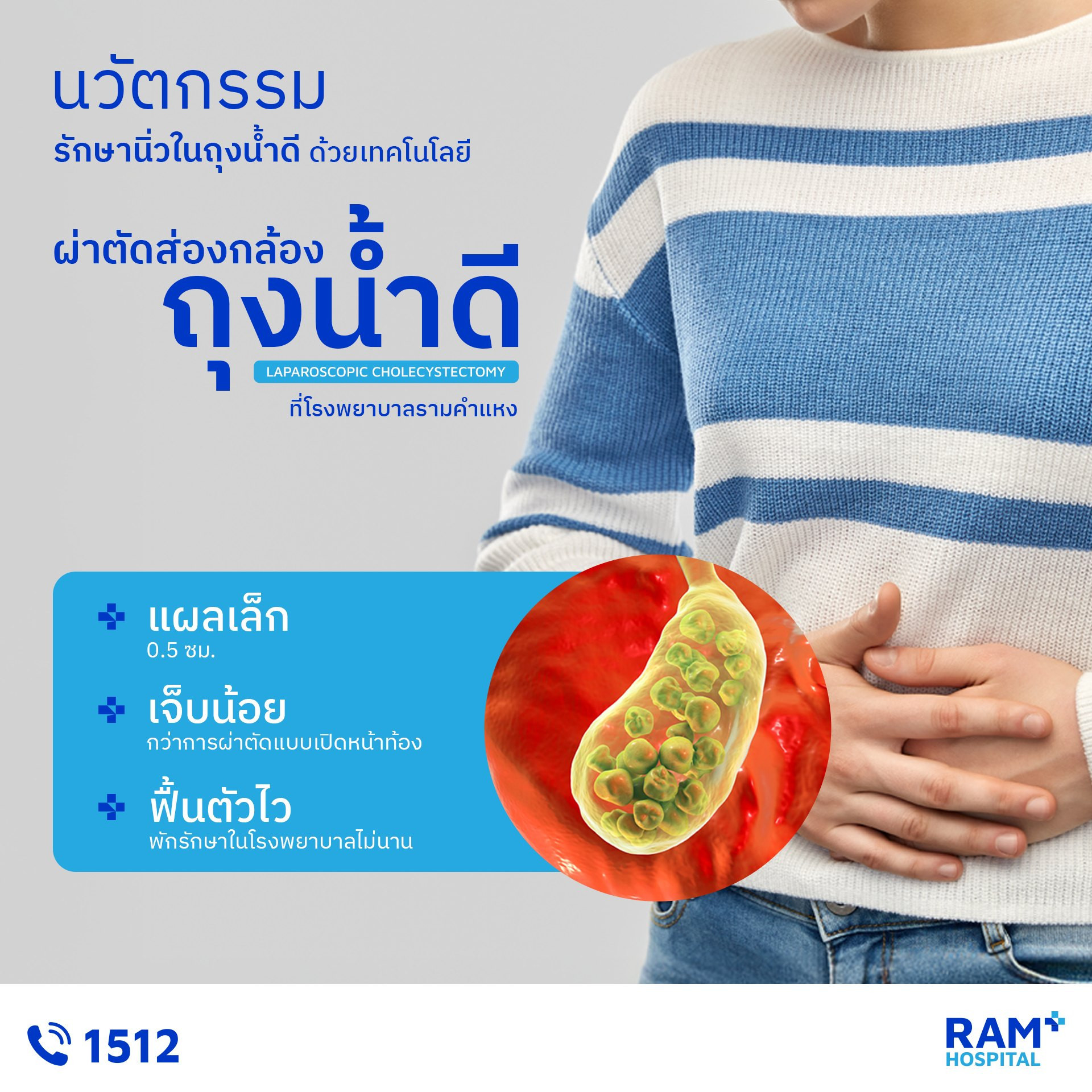
The body can still digest food normally because the gallbladder only serves as a storage for bile to concentrate it for fat digestion.
If you experience the following symptoms along with gallstones, the doctor may consider immediate surgery:
At Ramkhamhaeng Hospital, we are ready to provide peace of mind and care for you with love at every moment. Because we care about more than just treatment—it is about cherishing every second of life to make it meaningful. Attention to small details is the timeless heart of our service.
English
Danny A Sherwinter. (2024). Laparoscopic Cholecystectomy. Retrieved 12 January 2026, derived
from https://emedicine.medscape.com/article/1582292-overview?_gl=1*wy8wpw*_gcl_au*
NjA2OTczNDU5LjE3NjMzNjY5NzcuMTgxMzcyNDM1NS4xNzY3OTIzOTgyLjE3Njc5MjQwMzU
Gastroenterology