
AKARAWIT ASAWASAKSAKUL, M.D.
Spine Surgery


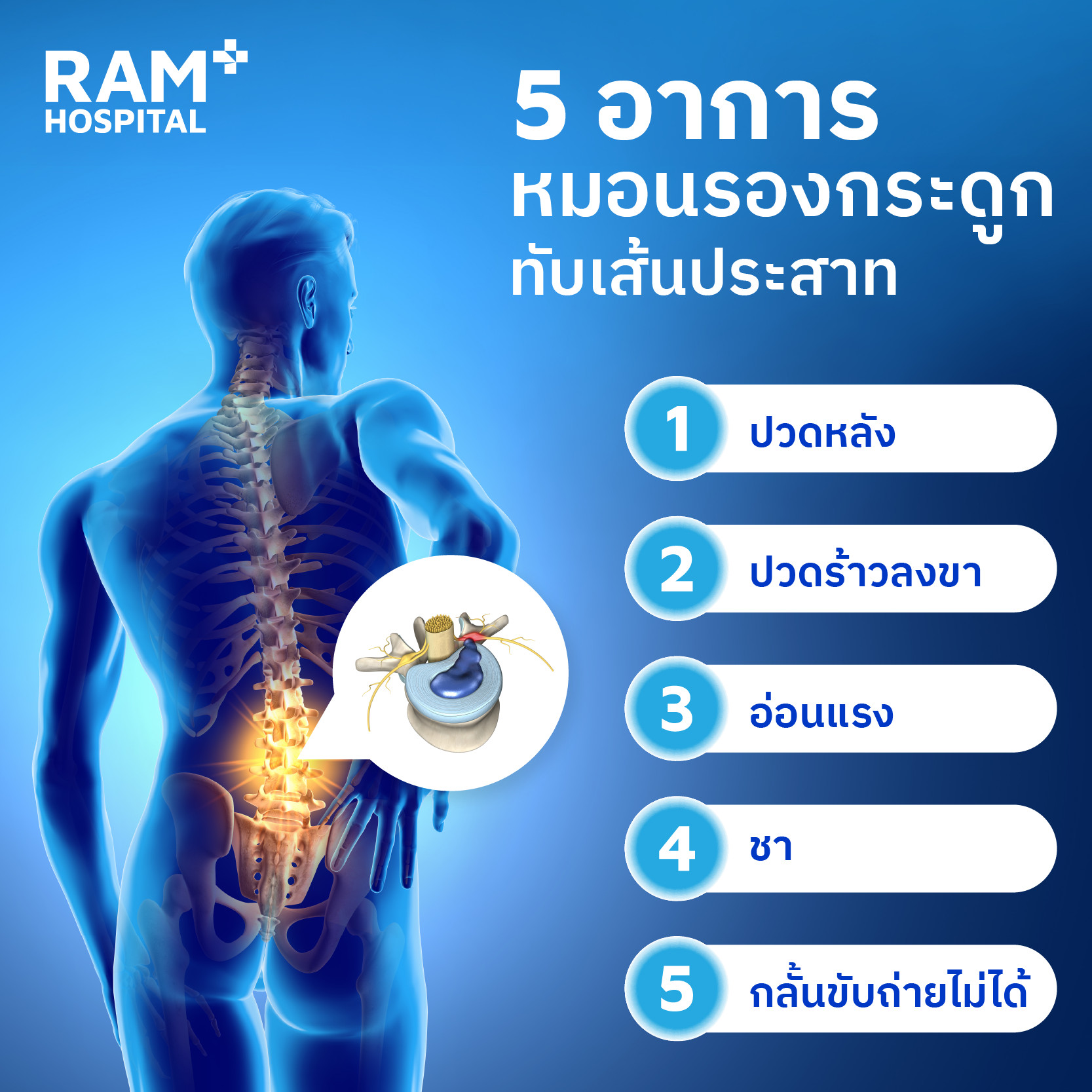
Lumbar disc herniation is a leading cause of lower back pain radiating down the legs, medically known as Lumbar Radiculopathy or Sciatica. While increasingly common, the mechanisms, spinal structures, and diagnostic processes remain unclear to many. This article aims to clarify the condition to help you make informed decisions with your specialist for effective treatment.
Typically, lumbar disc herniation affects 1-3% of the population, most commonly in those aged 30-50, with a slightly higher prevalence in men. It most frequently occurs at the L4-5 level, followed by L5-S1.
The spine serves as our central axis and weight-bearing structure. The spinal canal houses the spinal cord and nerve roots—the "main cables" transmitting signals from the brain to the limbs. Thus, the spine acts as both a support system and a protective shield for the nervous system.
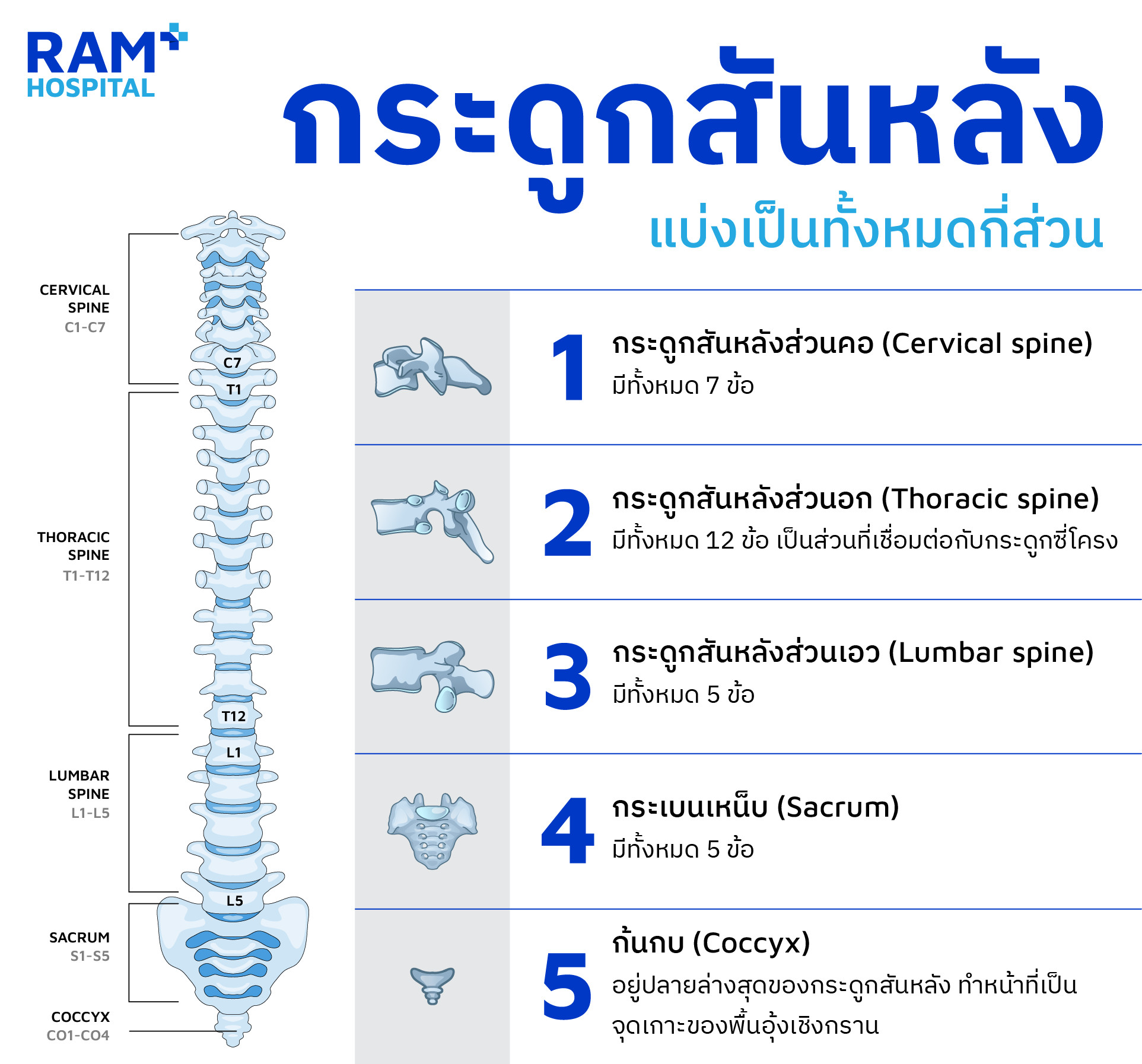
This article focuses on the Lumbar and Sacral regions, as spinal issues in different areas require distinct diagnostic and treatment approaches.
The lumbar spine consists of 5 vertebrae (L1-L5) connected to the Sacrum (S1). Intervertebral discs sit between each vertebra, acting as shock absorbers and providing flexibility for movement. Additionally, the Facet joints at the back facilitate spinal motion, which will be discussed further in our article on Spinal Stenosis.
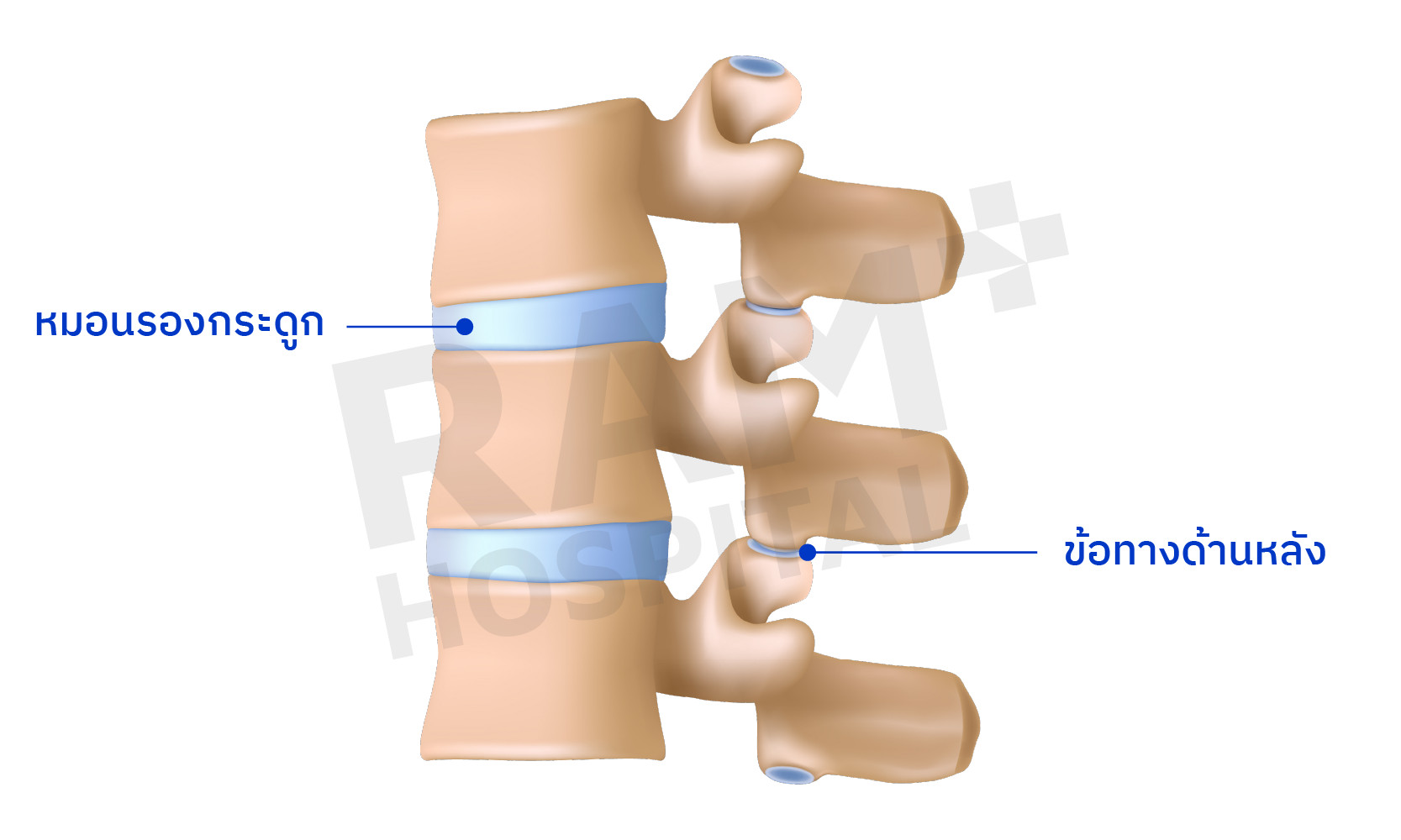
Support also comes from core muscles and ligaments. Modern treatments aim to minimize tissue injury to maintain the spine's load-bearing capacity.
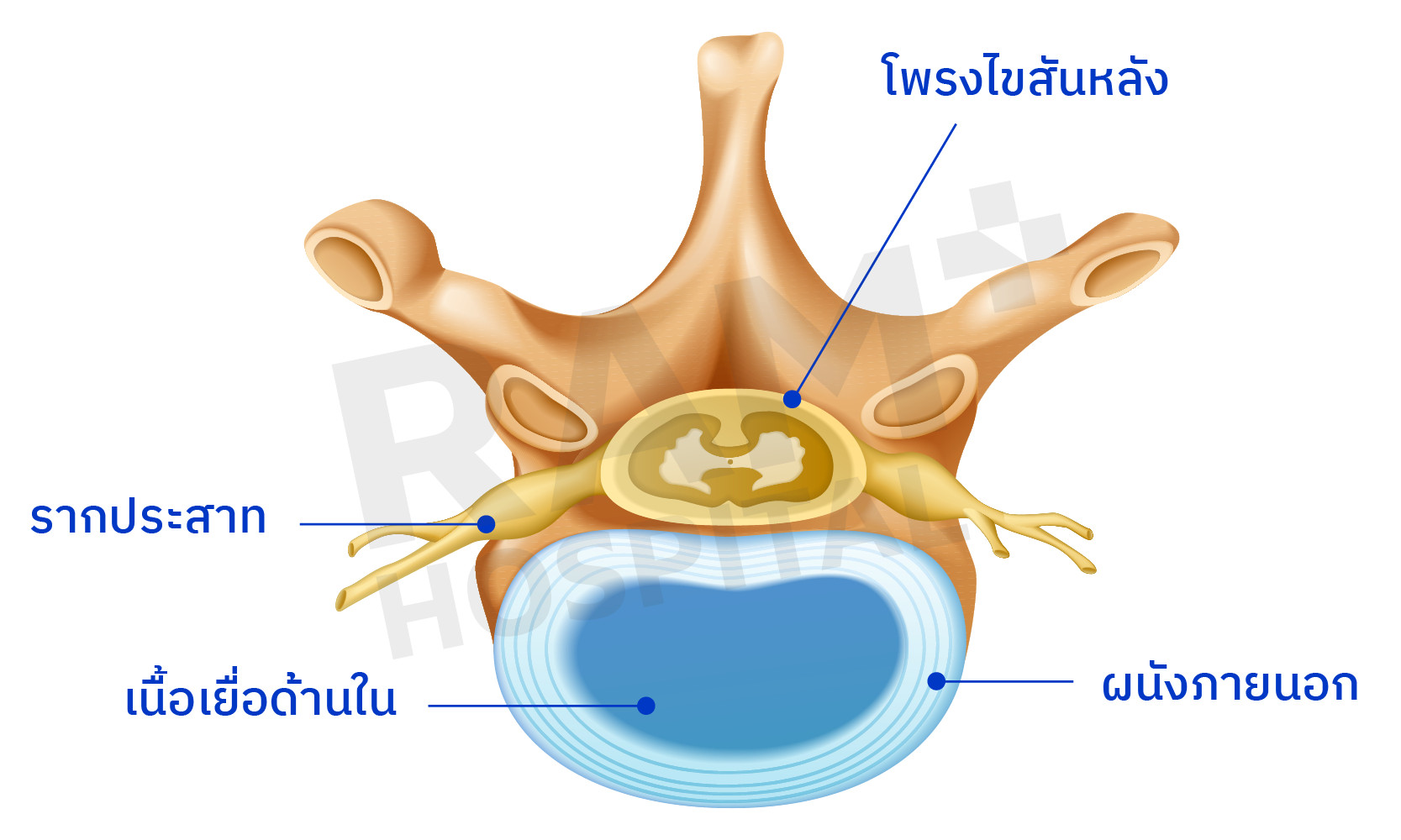
A disc consists of a tough outer wall (Annulus fibrosus) and a gel-like center (Nucleus pulposus). Think of it like a jelly-filled doughnut; if the outer layer cracks, the inner jelly can leak out into the spinal canal where nerve roots are located.
If the inner core leaks and presses against a nerve, it causes inflammation, pain, numbness, or weakness—similar to the pressure and inflammation of a blemish.
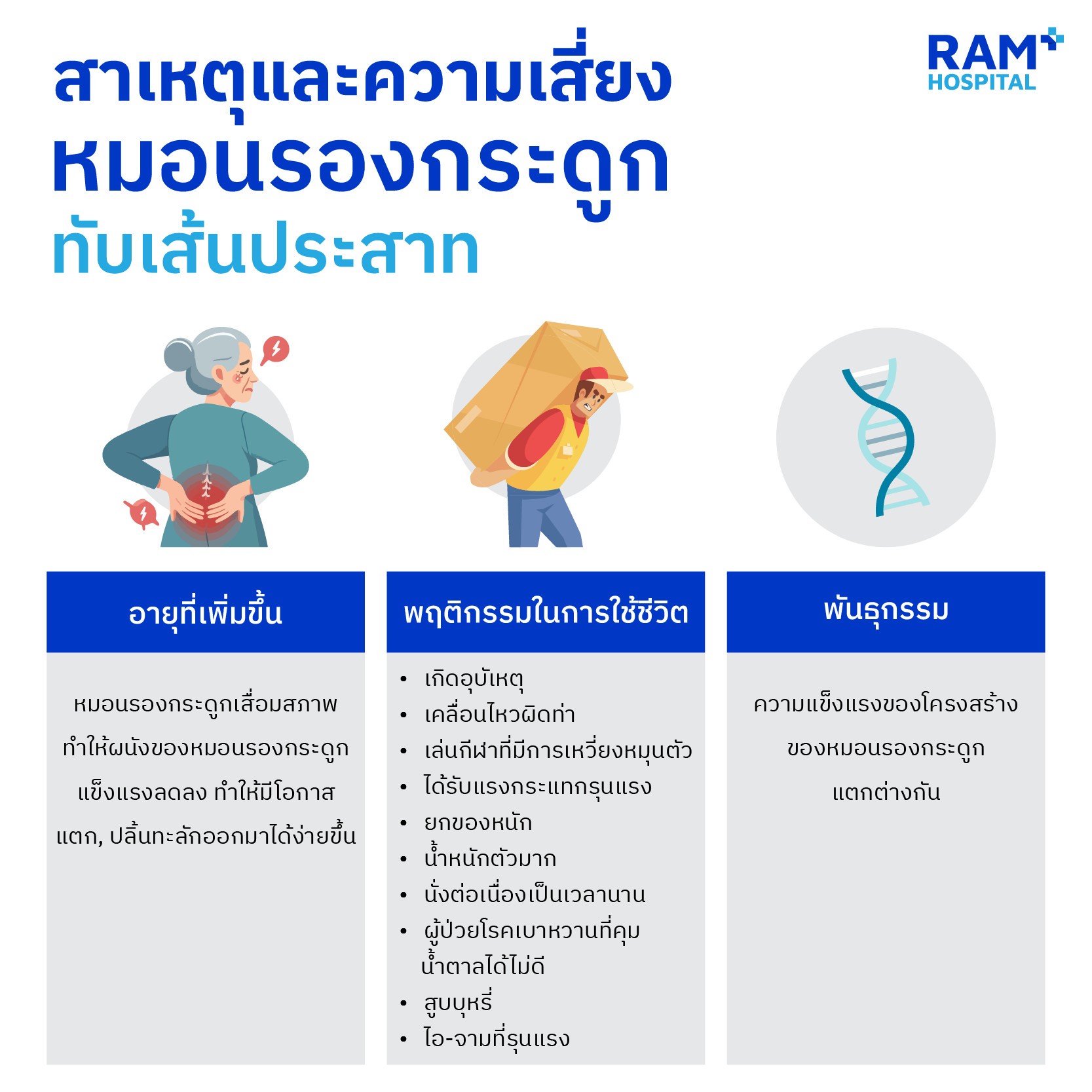
Unless caused by acute trauma, the condition usually stems from three main factors:
For diagnosis and treatment options, read more at: https://www.ram-hosp.co.th/th/news_detail/2910
Spine Surgery
Spine Surgery

Orthopedics
Orthopedics


