"Burns and Scalds" are common incidents that can frequently occur in everyday life, whether at home or in the workplace. Even with caution, it could happen to anyone one day. Ramkhamhaeng Hospital would like everyone to understand the nature of these injuries and how to perform proper first aid before receiving medical attention.
How Severe Are Burns and Scalds, and How Are They Evaluated?
When an incident occurs, the most crucial first step is evaluating the wound. In medicine, severity is categorized according to "wound depth" into 3 main degrees:
First-Degree Burns (First Degree)
Injury limited strictly to the outer layer of skin (Epidermis). The skin appears red with mild stinging pain and no blisters. Typically, it heals on its own within 1 week without leaving scars, unless secondary infection occurs. A common example is a sunburn from prolonged exposure to the sun.
Second-Degree Burns (Second Degree)
This level extends deeper into the dermis layer (Dermis), which is further subdivided into 2 types: superficial and deep.
- Superficial Partial-Thickness: Injury extends into the upper dermis. The wound causes considerable pain, and sometimes forms clear fluid-filled blisters with significant weeping of tissue fluid. With proper care, the skin will heal completely without leaving permanent scars.
- Deep Partial-Thickness: Injury reaches the deeper dermal layer. Pain is also severe, and distinguishing depth can be difficult. Healing takes longer, and there is a risk of contracture scarring.
Third-Degree Burns (Third Degree)
This is the most severe level, extending through all skin layers into subcutaneous fat, muscle, or even bone. The wound appears dry, leathery, and pale white, yellow, dark red, or charred black. Wounds at this degree often feel surprisingly painless because heat has completely destroyed the nerve endings in the skin.
Initial Estimation of Burn Area Size
In addition to depth, total wound surface area is critical. Medical professionals calculate burn size as a percentage of Total Body Surface Area (TBSA).
- Simple Self-Assessment Method: An area equal to 1 patient's palm (including fingers) equals approximately 1% of the total body surface area.
- Medical Assessment: Using the Rule of Nines principle (e.g., each arm = 9%, each leg = 18%).
First Aid Dos and Don'ts
Immediate Actions to Take
- Stop the burning process: Extinguish flames immediately (Stop, Drop, and Roll, cover with a thick blanket, or pour clean water).
- Cool the burn: Remove clothing/jewelry near the affected area. Run clean, cool room-temperature water over it for 5-20 minutes (do not soak too long to prevent Hypothermia).
- Chemical burns: Flush immediately with abundant amounts of clean water to dilute the chemical.
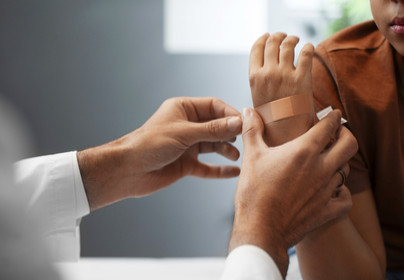
- Cover the wound: Cover loosely with a clean cloth or sterile gauze, then seek medical attention immediately.
Things NOT to Do in Case of Burns/Scalds
- Do NOT use ice or extremely cold water: Blood vessels will constrict, causing the burn to deepen and worsen.
- Do NOT apply toothpaste, ointments, balms, turmeric, or kitchen powders: These trap heat under the skin and pose a high risk of severe infection.
- Do NOT pop or pick at blisters: Blisters protect against infection; leave them intact for medical evaluation.
Skin Recovery and Post-Healing Care
- Site-Specific Care: Facial wounds should be treated with a thin layer of antibiotic ointment 3-4 times/day. For hand, foot, or leg wounds, elevate them to reduce swelling, and gently move joints after 72 hours to prevent joint stiffness.
- Avoid Sun Exposure: Avoid direct sunlight on the healed area for at least 3-6 months to prevent permanent hyperpigmentation.
- Moisturize Skin: Apply moisturizing lotions to restore hydration and reduce skin tightness and itching.
- Wear Pressure Garments: Wear pressure garments (Pressure Garment) for wounds that take longer than 3 weeks to heal or after skin graft surgery to prevent keloid formation.