

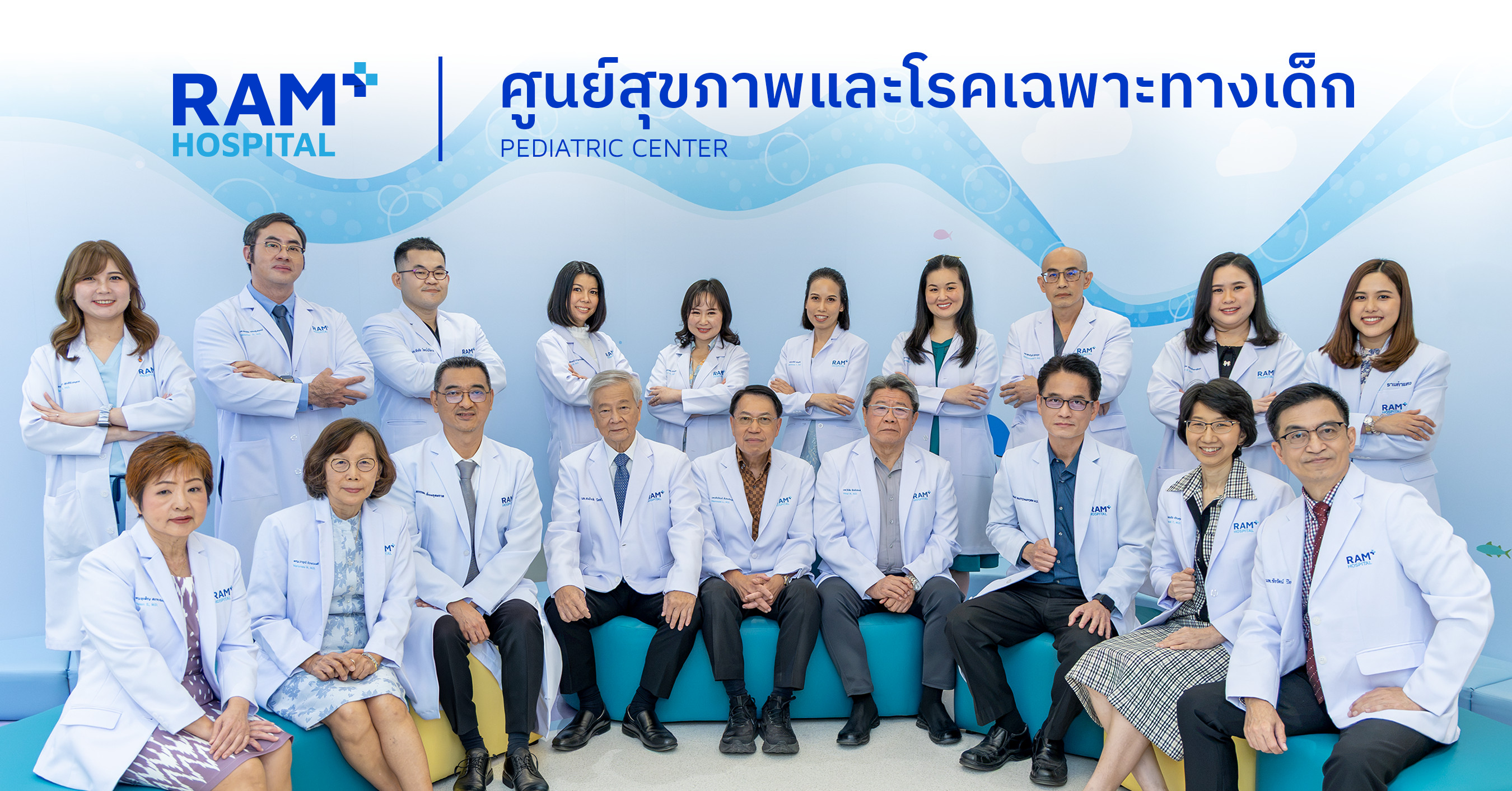
Because we understand that "Your child's health is the heart of parents," we want to be a part of fulfilling your life and family. The Children's Health and Subspecialty Center at Ramkhamhaeng Hospital is ready to be a second home that offers comprehensive care, ensuring that you and your child feel safe. Managed by pediatricians and a multidisciplinary medical team, we provide peace of mind for parents at every step of their child's growth.
We are ready to care for you and your little one with love and expertise 24 hours a day.


We separate service areas proportionally for the safety and hygiene of children under the concept of "Integrated Pediatric Care"
No matter what symptoms are causing you concern, our team of pediatric subspecialists is ready to diagnose and treat them effectively:

The Children's Health Center at Ramkhamhaeng Hospital provides a Pediatric Intensive Care Unit (PICU) ready to offer continuous care and close monitoring 24 hours a day by pediatric critical care specialists. The hospital aims to treat and prevent complications that could affect a child's future development and brain function. Furthermore, we allow parents to stay with and emotionally support their little ones at all times.
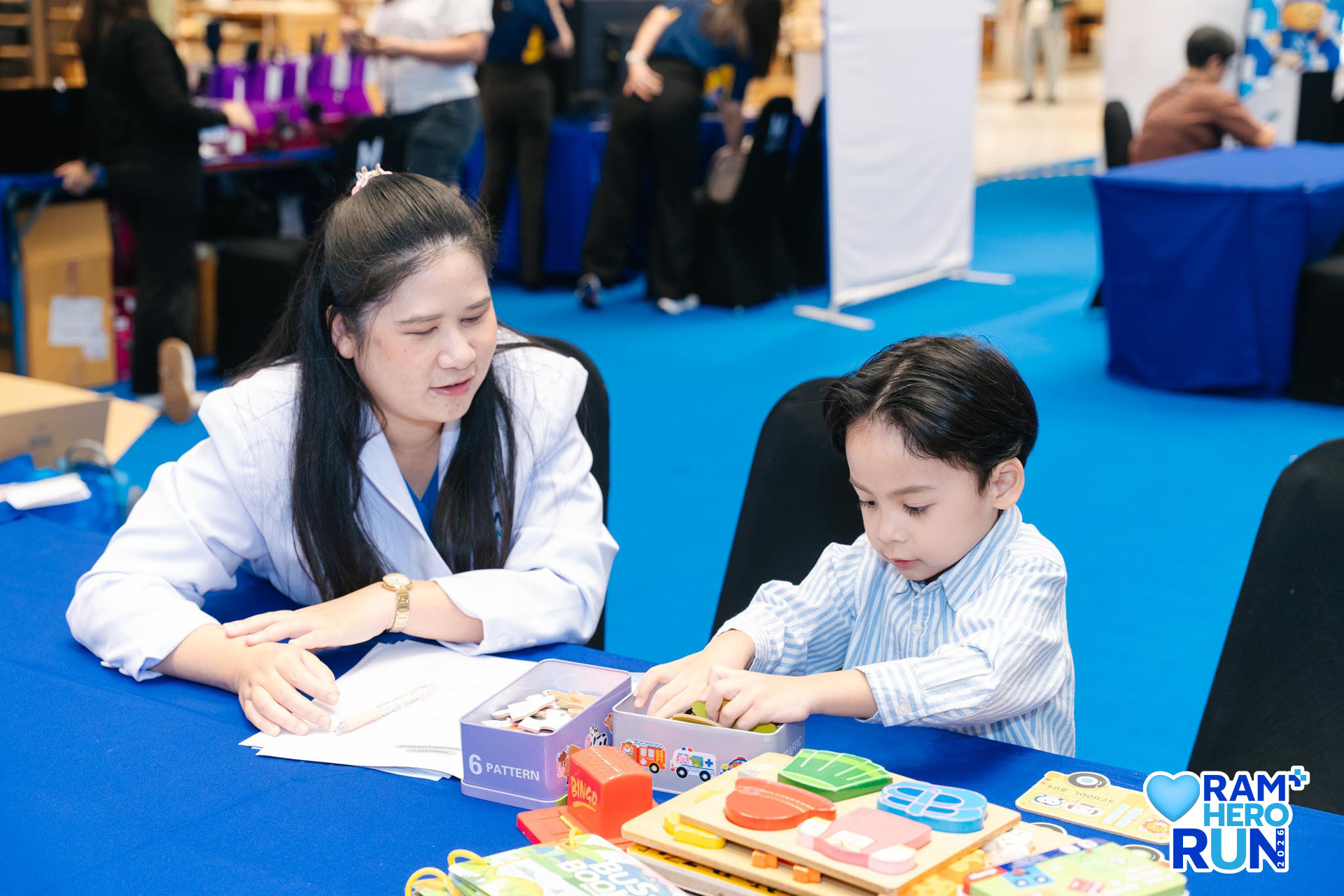
Q: Where is the best place for a child development assessment?
A: We believe that every child is unique. Our Child Development Stimulation Center is ready to embrace and support children, helping them grow intelligently and age-appropriately through close guidance and expert care.

Q: My child is not speaking clearly. Where should I take them for a check-up?
A: We have skilled speech-language pathologists ready to help your child regain the confidence to communicate effectively. Our team works collaboratively with other specialists, including occupational therapists, clinical psychologists, and pediatricians specializing in ADHD.


Napploy, a 6-month-old, developed a low-grade fever after two days of a runny nose. The fever escalated overnight, prompting her parents to take her to a local hospital in Ayutthaya when sponging and fever reducers didn't help. At the hospital, Napploy began to seize with a temperature of 39.5°C. After a brain scan and spinal tap, her hands and feet turned blue, indicating another impending seizure. She was rushed to the emergency room as her fever spiked every 5-10 minutes. Her condition didn't improve, so her father arranged for Ramkhamhaeng Hospital to send an ambulance.
Napploy's Father's Experience
Napploy's father was impressed from the start, noting that a doctor, not just nurses, accompanied the ambulance from Ramkhamhaeng Hospital, which was reassuring. Upon arrival at the Pediatric ICU, he found the nurses to be exceptionally caring, treating both the patient and family like relatives. He praised their attentiveness and the doctors' helpful advice.

Patient with MIS-C (Multisystem Inflammatory Syndrome in Children)
Ms. Nisthida Sukprasert, the patient's mother, recounts her son Jean's sudden severe symptoms. Initially presenting with extreme vomiting, low-grade fever, and prominent gastrointestinal issues, doctors became suspicious when they learned Jean had recovered from COVID-19 just 2-3 weeks prior, despite expecting high fever for post-COVID complications. His rapid deterioration, including jaundice, rapid heartbeat, and reduced consciousness, led to immediate PICU admission. There, initial test results confirmed severe inflammation, particularly affecting the heart. Doctors promptly initiated treatment with medication to improve heart muscle function and anti-inflammatory drugs.
Dr. Tarita Charuchanapongthorn, a pediatric critical care specialist, and Dr. Peeratuch Chokmungmeepisarn, a pediatric neurologist, revealed that after comprehensive treatment, the patient was diagnosed with G6PD deficiency, an underlying condition discovered during his hospital stay.
 โรคกล้ามเนื้อหัวใจอักเสบในเด็ก ปล่อยไว้นานอาจต้องเปลี่ยนหัวใจ
 โรคผื่นภูมิแพ้ผิวหนังในเด็ก รู้เร็ว ป้องกันทัน รักษาได้
 โรคคาวาซากิ รู้ให้ทัน ก่อนหัวใจลูกน้อยมีปัญหา
 ไวรัส RSV ภัยเงียบในเด็ก รู้ทันป้องกันลูกน้อยได้
 อาหารเพิ่มน้ำนมแม่ให้ลูกน้อย ตอนที่ 2
 อาหารเพิ่มน้ำนมแม่ให้ลูกน้อย ตอนที่1
 ลูกเป็นหวัด หรือ ติด RSV กันแน่?
 ลูกโตช้ากว่าเพื่อนในวัยเดียวกัน ทำยังไงดี?
 RSV โรคที่พบบ่อยในหน้าฝน
 เด็กแพ้อาหาร เราจะจัดการยังไง!!
 หากเกิดอุบัติเหตุทางศีรษะในเด็กควรทำอย่างไร?
 ภาวะเป็นหนุ่มเป็นสาวก่อนวัย ตอนที่ 3
 ภาวะเป็นหนุ่มเป็นสาวก่อนวัย ตอนที่ 2
 ภาวะเป็นหนุ่มเป็นสาวก่อนวัย ตอนที่ 1
 ลูกน้อยท้องเสียจาก “โรต้าไวรัส” อันตรายกว่าที่คิด
 ชวนคุณแม่มารู้จัก “วัคซีนพื้นฐาน” สำหรับลูกน้อย 0-12 เดือน ตอนที่ 2
 ชวนคุณแม่มารู้จัก “วัคซีนพื้นฐาน” สำหรับลูกน้อย 0-12 เดือน ตอนที่ 1
 เมื่อลูกปวดหัว อาการที่ไม่ควรมองข้าม
 เชื้อไวรัสที่พบบ่อยในเด็ก
 ผื่นสัญญาณแรกของเด็กบอบบาง
 ภาวะ MIS-C ในเด็ก เกิดขึ้นได้อย่างไร?
 อุบัติเหตุเข้า ICU ไม่คาดคิด ภัยใกล้ตัวของลูกน้อย


 เมื่อลูกน้อยชักจากไข้
 ภาวะแทรกซ้อนอันตราย จาก COVID-19 ในเด็ก

 ไข้เลือดออก โรคระบาดในหน้าฝน
 โรคผื่นภูมิแพ้ผิวหนังในเด็ก
 เมื่อลูกต้องไปโรงเรียน “Back to School ปลอดภัยจาก COVID-19 & โรคมือ เท้า ปาก”

 โรคชิคุนกุนยาในวัยเด็ก
 เทคโนโลยี Smart Ward

 RSV โรคที่พบบ่อยในหน้าฝน
 โรคอ้วนในเด็ก

Napploy, a 6-month-old, developed a low-grade fever after two days of a runny nose. The fever escalated overnight, prompting her parents to take her to a local hospital in Ayutthaya when sponging and fever reducers didn't help. At the hospital, Napploy began to seize with a temperature of 39.5°C. After a brain scan and spinal tap, her hands and feet turned blue, indicating another impending seizure. She was rushed to the emergency room as her fever spiked every 5-10 minutes. Her condition didn't improve, so her father arranged for Ramkhamhaeng Hospital to send an ambulance.
Napploy's Father's Experience
Napploy's father was impressed from the start, noting that a doctor, not just nurses, accompanied the ambulance from Ramkhamhaeng Hospital, which was reassuring. Upon arrival at the Pediatric ICU, he found the nurses to be exceptionally caring, treating both the patient and family like relatives. He praised their attentiveness and the doctors' helpful advice.
Patient with MIS-C (Multisystem Inflammatory Syndrome in Children)
Ms. Nisthida Sukprasert, the patient's mother, recounts her son Jean's sudden severe symptoms. Initially presenting with extreme vomiting, low-grade fever, and prominent gastrointestinal issues, doctors became suspicious when they learned Jean had recovered from COVID-19 just 2-3 weeks prior, despite expecting high fever for post-COVID complications. His rapid deterioration, including jaundice, rapid heartbeat, and reduced consciousness, led to immediate PICU admission. There, initial test results confirmed severe inflammation, particularly affecting the heart. Doctors promptly initiated treatment with medication to improve heart muscle function and anti-inflammatory drugs.
Dr. Tarita Charuchanapongthorn, a pediatric critical care specialist, and Dr. Peeratuch Chokmungmeepisarn, a pediatric neurologist, revealed that after comprehensive treatment, the patient was diagnosed with G6PD deficiency, an underlying condition discovered during his hospital stay.
