
PROFESSOR NARIN HIRANSUTHIKUL, M.D.,PhD.
INTERNAL MEDICINE, SUBSPECIALTY INFECTIOUS DISEASES



Long COVID (Long COVID) is a condition where patients who have recovered from COVID-19 continue to experience chronic symptoms that affect both their physical and mental health, such as fatigue, difficulty breathing, and more. This article will help you understand the symptoms of Long COVID and how to manage the condition appropriately.
Long COVID (Long COVID) or Post Covid-19 Syndrome is a condition in which people who have recovered from COVID-19 still face lingering symptoms. Even though the COVID virus has cleared from the body, certain symptoms do not go away with it.
The exact cause of Long COVID remains unclear, but it can cause physical and mental abnormalities in people who have been infected with COVID-19. Therefore, it is recommended to regularly monitor and evaluate your own body after recovering. If any abnormalities are found, you should see a doctor as soon as possible for a physical assessment, medical treatment, and an appropriate rehabilitation plan, as these symptoms can persist long-term, affect daily life, and may become dangerous if left untreated for too long.
For those who have recovered from COVID-19, in addition to constantly observing abnormalities, regular health check-ups are equally important. This helps you stay informed about any abnormalities that occur and care for yourself appropriately.
Long COVID symptoms vary from person to person. They do not have fixed characteristics and can occur throughout the body, including the respiratory, nervous, digestive, and cardiovascular systems. As a result, some recovered patients are still unable to return to their normal daily lives. Long COVID symptoms have a 30-50% chance of occurring among individuals who have recovered from COVID-19, particularly those who experienced severe illness.
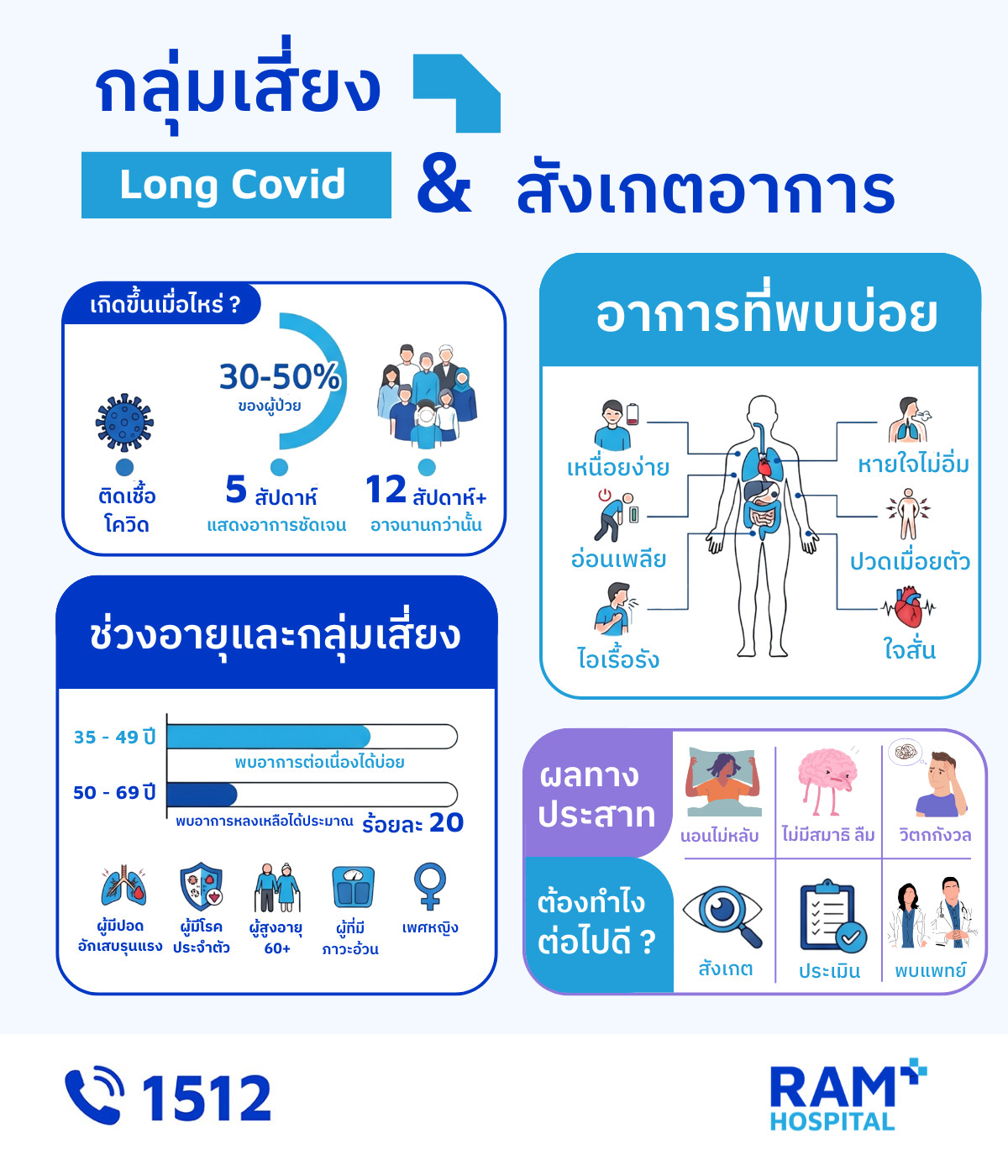
The BBC, citing data from the UK's National Health Service (NHS), reported that Long COVID refers to symptoms that persist for many weeks after a COVID infection. While symptoms usually improve within 12 weeks, some individuals may experience lingering symptoms for much longer. It is most commonly found in patients aged 35-49 and 50-69 years old. Approximately 20% of patients fall into this category 5 weeks after contracting the virus.
Early detection of treatable or manageable abnormalities will help shorten the duration of those symptoms or significantly increase the chances of making a full recovery.
INTERNAL MEDICINE, SUBSPECIALTY INFECTIOUS DISEASES

Infectious Disease

Pediatric Infectious Disease