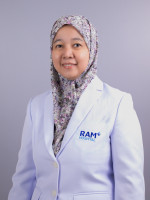
SUPITCHA THAMISSARAKUL, M.D.
Pediatrics Developmental and Behavioral Pediatrics



'Flapping arms, avoiding conversations, and avoiding eye contact' might sound unfriendly at first. For some children, it is impossible to notice anything unusual just from the outside. However, through deeper conversations or closer looks, you might realize that certain things seem out of the ordinary.
Sometimes, they repeatedly focus only on specific objects, as if completely disconnected from everything else. These signs are concerning. What should parents do to observe and care for their child when they find out their child has autism?
The word 'Autism' originates from a Greek word meaning 'self'. It was used by Swiss psychiatrist Eugen Bleuler to describe the behavior of individuals who withdraw from everything to enter their inner world. Therefore, autism is a condition that makes patients prefer isolation within themselves, appearing unimaginative, almost like robots.
Autism or 'Autism Spectrum Disorder' (ASD) is a developmental disorder affecting the brain and nervous system. It impacts language development, communication, and social interactions with others, and is characterized by repetitive behavioral patterns and narrow, intense fixation on specific things. Symptoms vary widely across the spectrum.

Upon entering adolescence, they may face social adjustment issues, leading to alienation and making them easy targets for bullying, which can result in stress and depression.
Although the exact cause of the condition remains unclear, several factors are known to contribute to Autism Spectrum Disorder, including:
Autism is a condition that can be passed down through genetics. In some cases, advanced parental age at conception poses a higher risk. Autism occurs significantly more often in boys than in girls. Evaluations often reveal brain impairments, particularly in regions linking social skills and emotional processing.
Toxic environments, alongside complications before, during, and after birth, directly affect the child. Factors like oxygen deprivation during delivery, premature birth, chemical imbalances in the body, or exposure to lead post-delivery increase the likelihood of developing autism later in life.

Even without typical congenital brain developmental abnormalities, a child can still develop autistic-like behaviors. If left in an unsuitable environment with improper care, this condition can manifest. 'Virtual Autism' refers to a state where a child lacks human interaction, resulting in delayed communication and social development. With proper attention, play, and regular conversations, the child can return to normal.
Physicians begin with a medical history review before using behavioral observation, interaction assessment, and comparing developmental milestones against peers. Parents can generally notice unusual development starting from 1 year of age.
Generally, it can be categorized into 3 levels:

Individuals with autism often experience co-morbidities such as epilepsy, depression, anxiety, or ADHD. Some experience sleep disorders and self-harming tendencies; therefore, medical professionals and guardians must monitor them closely.
Source: World Health Organization (WHO)


Physicians utilize medications to balance neurotransmitters to manage behavioral expressions. Generally, medical teams use combination therapies tailored to the specific developmental limitations.
Speech therapy targets communication deficits, aiming to enhance language comprehension and speech. This intervention is also used for individuals who have lost communication abilities due to a stroke.
Therapists incorporate group dynamics to reinforce positive social interaction and self-care skills, empowering children to communicate their needs and integrate with others.
Providing dedicated spaces for children to develop social interactions through play. Specialized occupational therapy programs for children with special needs are utilized to stimulate development. This offers excellent results in motor skill training and optimizes brain neural connections.
Following professional care from a pediatrician, guardians should collaborate to build an environment that facilitates learning, such as reading illustrated storybooks together.
Read more: Occupational Therapy and Special Needs Child Development
'Woo Young-woo', whose name reads the same forward and backward, stands as a prominent representative of the autistic community. Sometimes, we might not realize that subtle autistic traits can be hidden among seemingly ordinary individuals. Many times, beneath a quiet or detached exterior lies a hidden genius waiting to emerge once given the proper direction and understanding.

Pediatric Center at Ramkhamhaeng Hospital is dedicated to supporting children's development so they can grow and thrive happily in society. Guided by clinical psychologists, occupational therapists, and pediatricians specializing in child behavior, we firmly believe that every child harbors a unique spark waiting to shine brightly when provided with the correct, specialized care.
Pediatrics Developmental and Behavioral Pediatrics
Child and Adolescent Psychiatry
Pediatrics Developmental and Behavioral Pediatrics

Developmental and Behavioral pediatrics