
APASRI LUSAWAT, M.D.
Pediatric Neurology


In the eyes of parents, even the smallest change in their child is a crucial signal. When a once-cheerful child becomes stubborn, aggressive, or faces a plateau in development, we often wonder if it's due to mood or environment. However, in the world of neurology, the truth may be more complex. If the child is autistic, it is even more concerning, as abnormal behavior may just be the "tip of the iceberg" of a hidden neurological "short circuit" beneath the surface.
For neurotypical children, severe headaches or brainwave abnormalities might manifest as defiant behavior. But in children with Autism Spectrum Disorder (ASD), the severity of these symptoms is magnified because they may not know how to verbalize their pain. Research indicates that self-harm or violent meltdowns are often "warning signs" of undiagnosed physical health issues.
Outbursts are therefore ‘silent signals’ to survive an invisible crisis that could strike... at any moment.
If you think "Epilepsy" only involves visible convulsions, that understanding might be incomplete. There is a condition known as "Silent Seizures" or electrical short-circuiting in the brain without obvious physical symptoms. Children with autism are found to have a co-occurrence with epilepsy as high as 50-60%. In those with communication limitations, these abnormal electrical currents can disrupt brain function, leading to a regression in development that is truly unfortunate.
Research (Tuchman & Cuccaro, 2011) states that intellectual disability is a risk factor for epilepsy in autistic children, with a risk 3 times higher than those without intellectual disability.
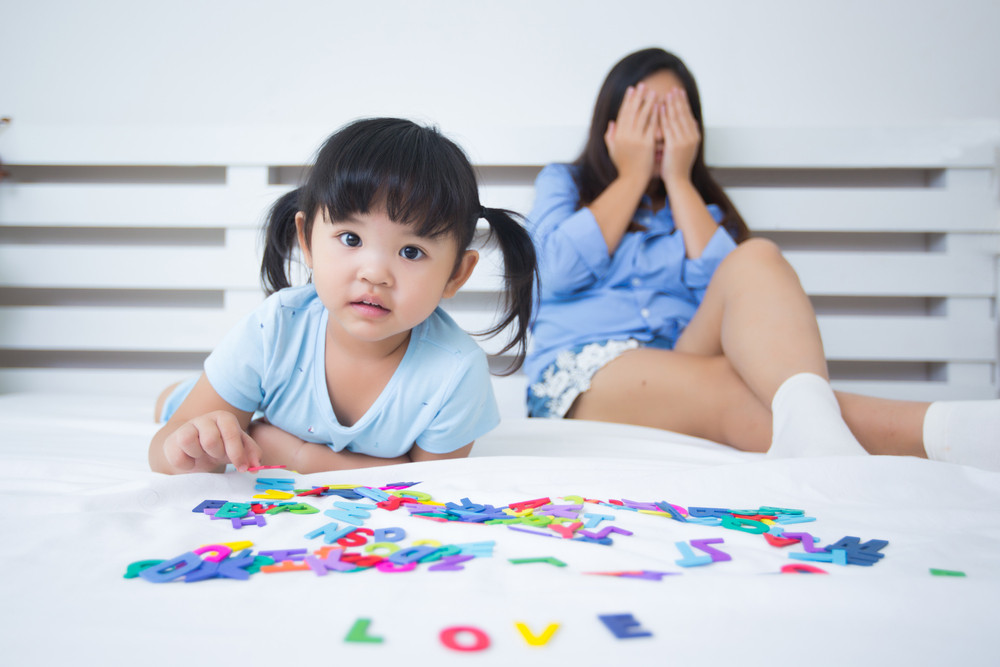
Medical research has found significant clues indicating that epilepsy and autism do not happen together by chance. Both conditions share ‘Genes’ as a common biological root, much like branches growing from the same trunk through abnormalities in brain structure.
The study Autism Spectrum Disorder and Epilepsy: Point of Convergence or Divergence states that autism is closely linked to epilepsy because many genes associated with autism are also involved in ion regulation. This causes abnormal electrical activity, making neurons more easily stimulated than normal. Consequently, patients with autism may have co-occurring epilepsy, and many patients with epilepsy may also exhibit autism.
This risk doesn't occur just once but has two "critical peaks" that parents should watch for: early childhood (ages 2-5) and again during adolescence, when the brain undergoes major reorganization.
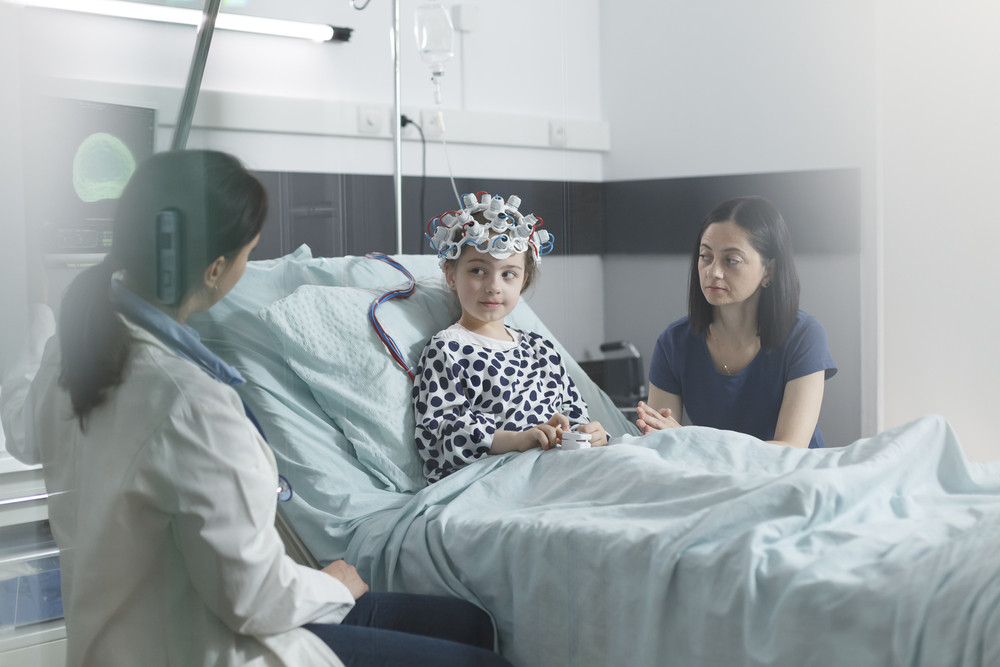
If your child has a seizure, the most important thing is for parents to "Stay Calm" from the very first second to help the child through the crisis.
An EEG is not just a test; it is a way to "hear the voice the child cannot speak" to find the short-circuit points and provide targeted treatment before damage spreads and permanently takes away the child's true potential.
Ramkhamhaeng Hospital is ready to help handle the unexpected from the first second of a seizure. We believe that.. understanding the root cause of pain is the “Final Key” that unlocks life’s problems toward a solution.
Thai Language
RAMA Channel. (July 25, 2017). Epilepsy in Children: Meet The Expert July 24, 2017
(3/5) [Video]. YouTube. https://www.youtube.com/watch?v=gPN6dKYPhgM
English Language
American Academy of Pediatrics. (2019). Identification, Evaluation, and Management of Children
With Autism Spectrum Disorder. Pediatrics.
https://publications.aap.org/pediatrics/article/145/1/e20193447/76930/Identification-
Cleveland Clinic. (2024). Epilepsy in Children. Retrieved January 27, 2026, from
https://my.clevelandclinic.org/health/diseases/12252-epilepsy-in-children
Tuchman, R., & Cuccaro, M. (2011). Autism spectrum disorder and epilepsy: Disorders with a shared
biology. National Library of Medicine (PMC4475437).
https://pmc.ncbi.nlm.nih.gov/articles/PMC4475437/
Pediatric Neurology

Pediatrics Developmental and Behavioral Pediatrics

Pediatrics Developmental and Behavioral Pediatrics

Speech pathologist