นพ. PEERATHAT CHOKEMUNGMEEPISARN, M.D.
Pediatrics



Vertigo is actually a subjective sensation where patients feel as though their surroundings are spinning or that they themselves are spinning, even though they are completely still. One crucial cause is an inner ear abnormality, with three common conditions frequently diagnosed:
This is the most common type. It can be identified by vertigo episodes that last from seconds to minutes. The symptoms occur suddenly when the patient moves their head. If the head is kept still, the symptoms subside, but shifting the head back in the same direction will trigger the vertigo again.
This can be treated through physical therapy involving head maneuvers to help reposition the displaced otoconia (ear crystals). Normally, these crystals are tightly clumped inside the otolith organs to help maintain balance. However, with aging and bodily degeneration, or in individuals under 50 often due to head injuries or accidents, some crystals can become detached and float into the semicircular canals. When turning the head toward the affected side, these crystals move and stimulate the fluid in that ear, immediately triggering vertigo.
Patients need to have the ear crystals repositioned back to their original place through physical canalith repositioning maneuvers, which take about 10-15 minutes per session. Afterward, self-care guidance is provided for about 1 week before a follow-up appointment is scheduled. One in three patients who recover from this condition may experience a recurrence within 1 year. Therefore, care should be taken by getting plenty of rest and avoiding frequent bending, tilting, or rapid head movements to prevent the symptoms from returning.
Ménière's disease occurs when the inner ear system fails to maintain proper fluid balance, leading to increased fluid pressure that affects both balance and hearing. It is most commonly found in people aged 30-50, with a similar incidence rate in men and women. Patients will experience vertigo episodes lasting from 20 minutes to several hours. This is typically accompanied by aural symptoms, such as a feeling of fullness or pressure in the ear due to the fluid buildup, hearing loss, and tinnitus (ringing in the ear).
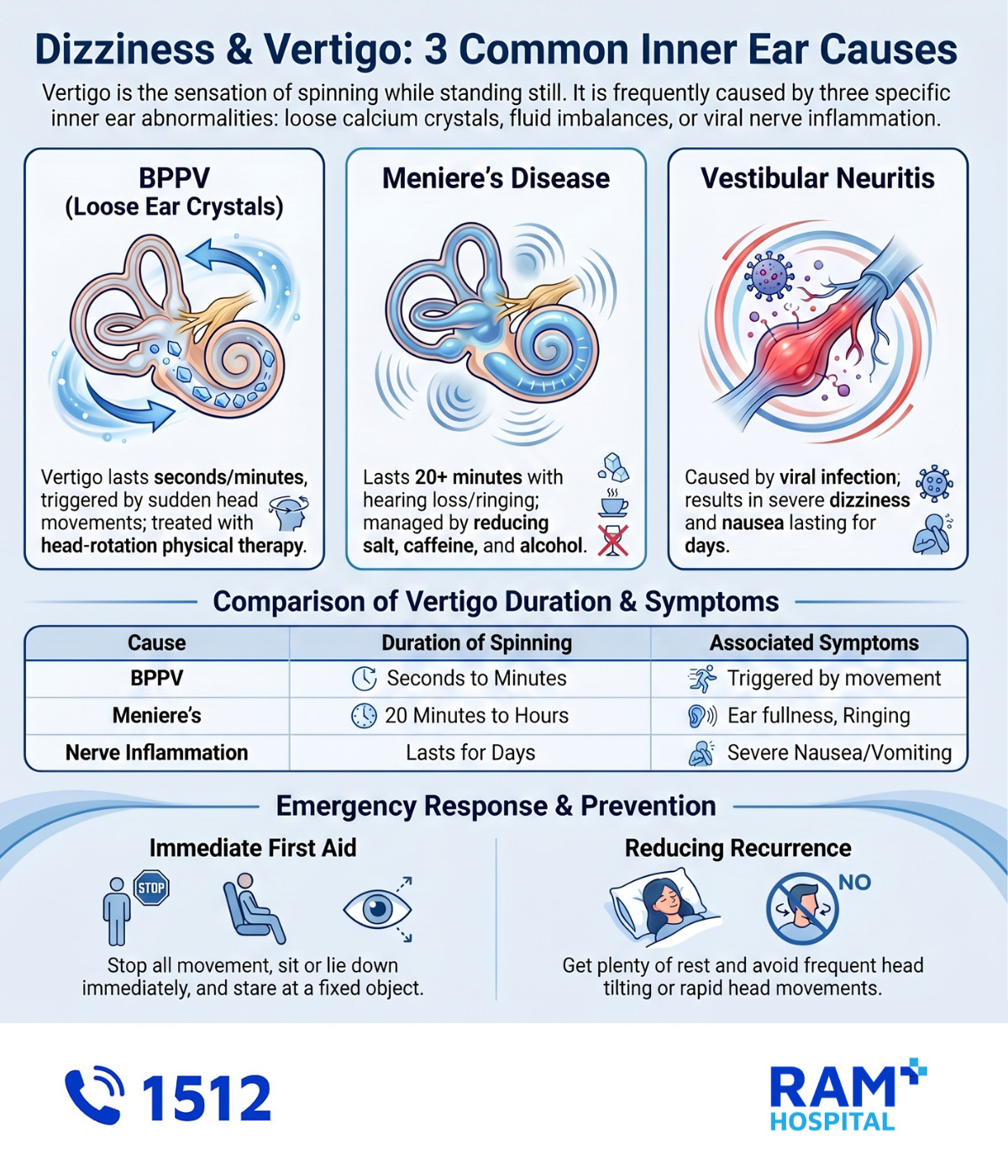
Physicians will aim to regulate inner ear fluid levels by prescribing diuretics to reduce fluid retention and medication to improve blood flow to the inner ear. This is combined with lifestyle modifications, including avoiding salty foods, alcohol, and caffeine, as well as managing triggers like stress and sleep deprivation. In cases where oral medications or lifestyle changes do not bring improvement, alternative treatments include intratympanic injections into the inner ear through the eardrum or surgery.
Vestibular neuritis is primarily caused by a viral infection. Patients will suffer from severe, acute vertigo that lasts for days, which is heavily accompanied by nausea and vomiting.
The treatment for inner ear nerve inflammation involves using medications during the initial phase to suppress the severe vertigo. Once the vertigo subsides, patients are taught vestibular rehabilitation exercises to help retrain and restore balance equilibrium between both ears.
Read more details about Otolith Disorders and Vertigo here >> https://www.ram-hosp.co.th/news_detail/267
In the event of sudden, acute vertigo, the very first thing you should do is stop all activity, stay still, find something to hold onto, and sit down or lie flat on the floor to prevent accidents. Lying down to rest, closing your eyes, or focusing your gaze on a fixed, non-moving object can also help reduce dizziness.
Edited
27/01/2023
Pediatrics

Ophthalmologist

Pediatric Neurology