Patient Testimonial

A Swift Recovery
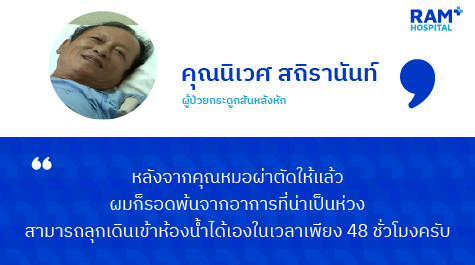
Niwet Sathiranun, a 63-year-old from Chonburi, shared his remarkable recovery story. Just 48 hours after spinal surgery for a fracture, he was able to get up and walk to the bathroom independently.
Mr. Sathiranun's injury occurred when he fell nearly two meters from a ladder while pruning a tree. Despite no one witnessing the fall, he managed to get up and drive himself the 200 meters back home. He then explained the situation to his wife, who promptly called for an ambulance from Ramkhamhaeng Hospital.
Upon arrival at the hospital, he was unable to urinate. A detailed medical history and an MRI revealed a broken vertebra from the impact, leading doctors to recommend immediate corrective surgery.
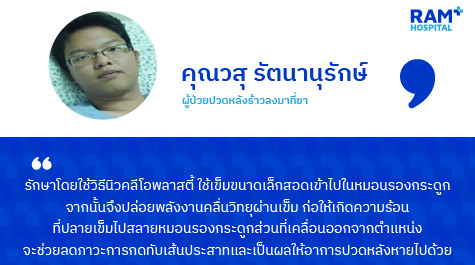
She had endured knee pain for more than three years before deciding to seek medical care. Initially, the symptoms were caused by the nature of her job, which required prolonged standing, leading to tendon inflammation, combined with pre-existing knee osteoarthritis. As a result, the pain did not subside.
Moreover, over the past 5–6 months, the symptoms progressively worsened to the point where she was unable to walk. Following a recommendation from a colleague, she consulted a physician at Ramkhamhaeng Hospital, where she was diagnosed with knee osteoarthritis.
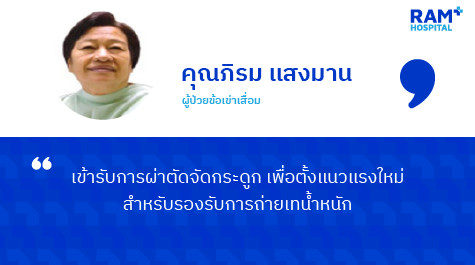
Common symptoms in such patients include severe knee pain, leg deformities such as bowlegs or knock-knees, difficulty walking, and an increased risk of falls. After careful consideration, the physician determined that the patient was still relatively young and not yet suitable for knee replacement surgery.
Instead, the doctor recommended corrective osteotomy, a surgical procedure to realign the bones and redistribute weight-bearing forces. This involved placing a metal fixation device in the leg to correct the bowing and restore normal alignment. At the same time, this treatment helps delay the need for knee replacement, as proper leg alignment reduces uneven stress on the knee joint and slows the progression of degeneration to some extent.